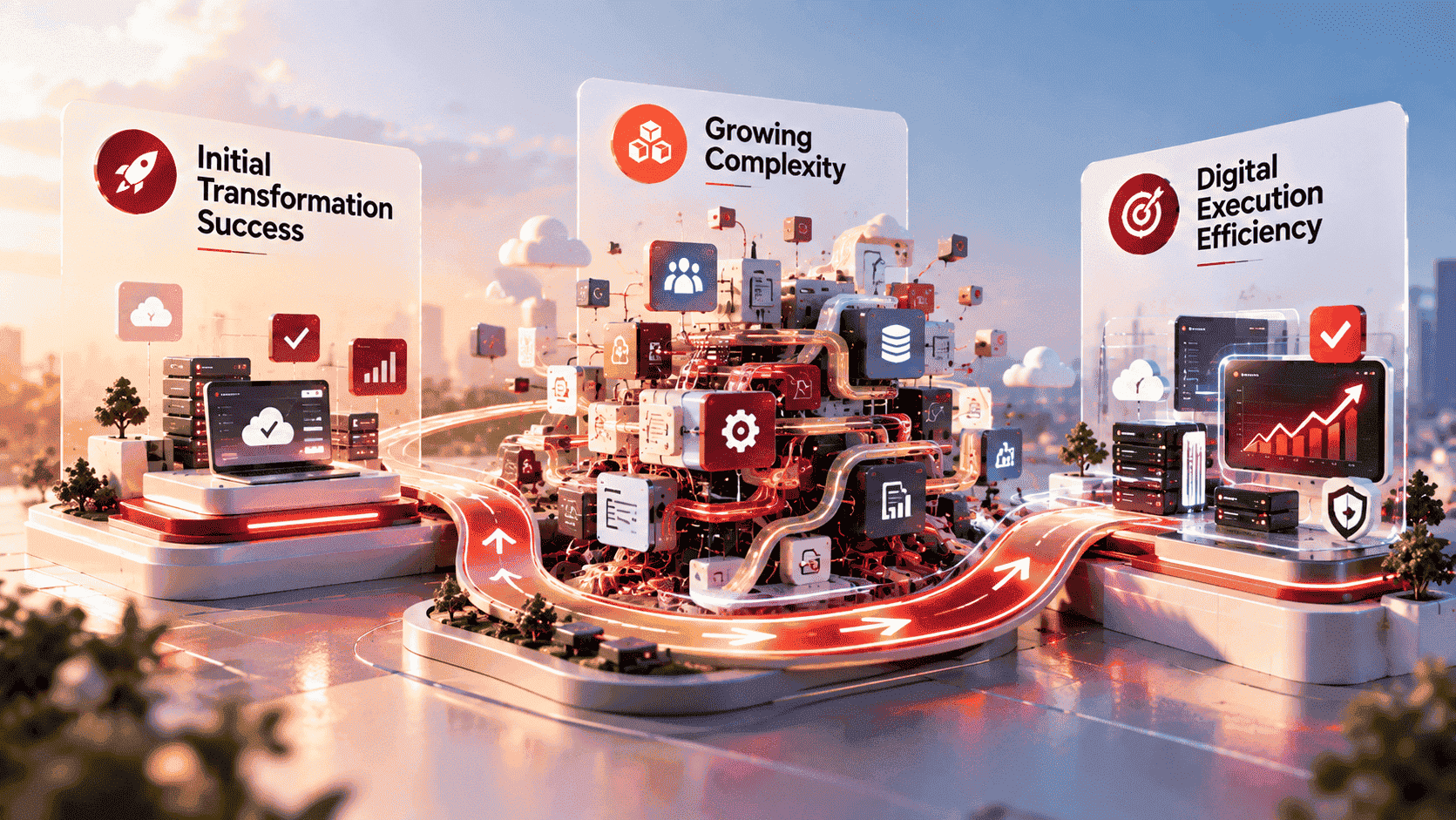









As organizations scale their technology environments, operational complexity often increases faster than expected. New systems are deployed, digital initiatives expand, and technology becomes increasingly embedded within critical business processes. While implementation may be successful, many organizations discover that maintaining consistency, accountability, and operational performance becomes significantly more difficult over time.
The challenge is often not the technology itself but the absence of a structured approach to managing technology after implementation. As operational dependencies grow, organizations require clear ownership, governance, decision making processes, and operational controls to maintain stability and support future growth.
A well defined technology operating model provides the structure required to operate technology effectively at scale. It establishes how technology is managed, governed, and continuously improved once systems become part of daily business operations.
Organizations that invest in a scalable operating model are better positioned to reduce operational friction, improve accountability, and support sustainable digital transformation.
What Is a Technology Operating Model
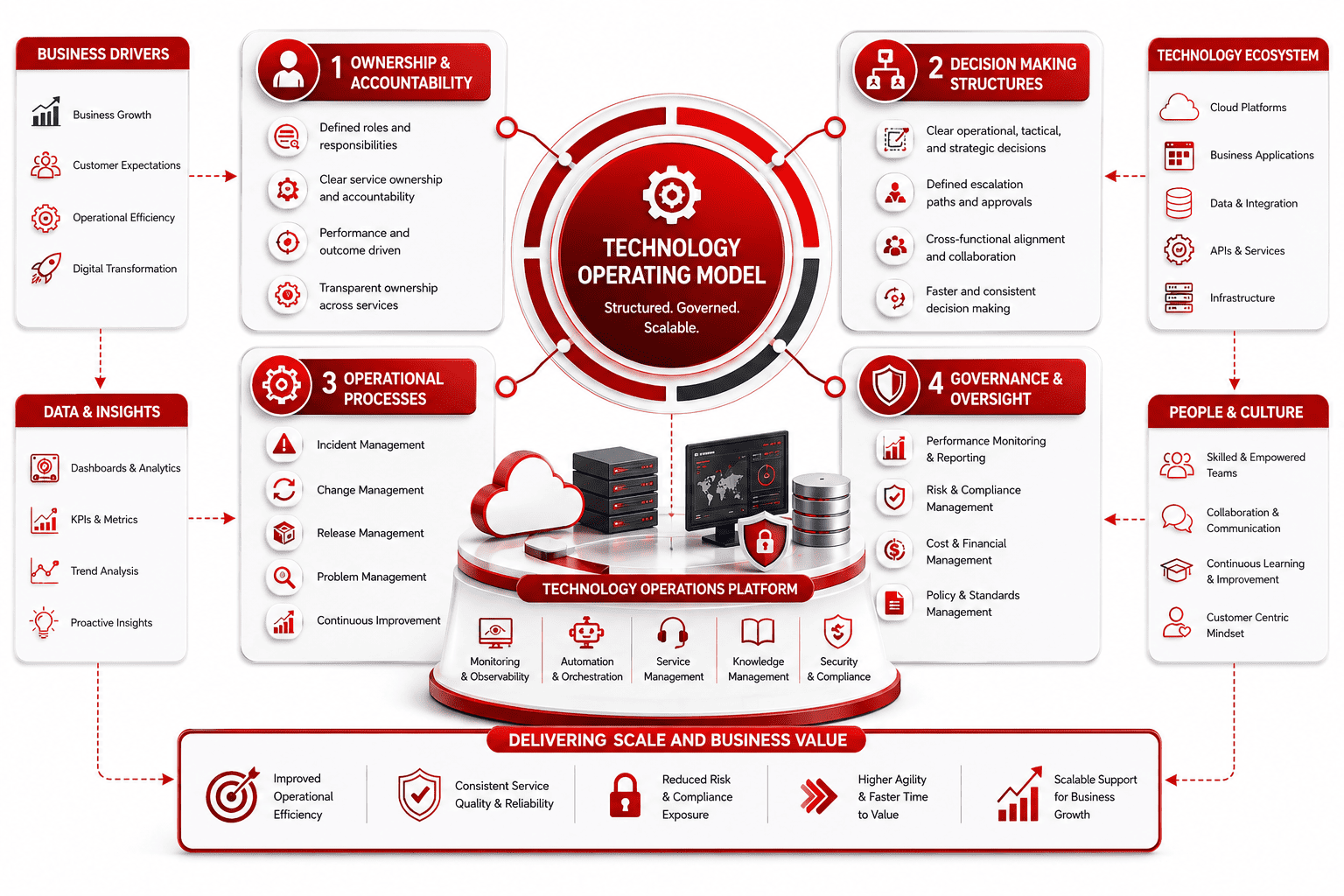
A technology operating model defines how technology is managed, governed, supported, and improved across an organization after implementation.
Rather than focusing on how systems are built, a technology operating model focuses on how technology operates in day to day business environments. It establishes the structures, responsibilities, processes, and governance mechanisms required to support technology consistently as complexity increases.
A well designed operating model helps organizations answer critical questions such as:
who owns technology services after go live
how operational decisions are made and escalated
how incidents, changes, and improvements are managed
how performance, risk, and operational outcomes are monitored
Without a defined operating model, these responsibilities are often managed inconsistently across teams, creating operational inefficiencies and increasing risk.
Why Technology Operating Models Matter at Scale
As organizations grow, technology environments become more interconnected and business critical. Systems support more users, integrations become more complex, and operational expectations increase significantly.
Organizations frequently encounter challenges such as:
increasing operational complexity across systems and teams
growing dependencies between applications and business processes
higher expectations for availability, performance, and security
greater operational risk associated with changes and incidents
Without a structured technology operations management approach, organizations often struggle to maintain consistency and accountability as complexity grows.
The importance of designing operational structures that support growth is explored in Designing a Scalable Technology Operating Model, which explains how organizations establish governance and execution models that support long term scalability.
Technology Operating Model vs IT Operating Model
Organizations often use the terms technology operating model and IT operating model interchangeably. In practice, both concepts refer to the framework used to manage technology operations, governance, decision making, and continuous improvement across the organization.
The specific terminology matters less than the outcomes the model delivers.
A successful operating model provides:
clear ownership and accountability
consistent operational execution
reduced dependency on individual expertise
structured governance and oversight
scalable support for future growth
Organizations rarely struggle because of insufficient technology alone. More often, they struggle because the structures required to manage technology consistently have not been clearly defined.
Core Components of a Technology Operating Model
Organizations that successfully operate technology at scale typically establish several foundational components within their operating model.
1. Ownership and Accountability
Effective operating models define who is responsible for technology services, operational outcomes, and decision making after implementation.
Clear ownership helps organizations:
improve accountability across teams
accelerate operational decision making
reduce ambiguity during incidents and service disruptions
Ownership becomes increasingly important as technology environments expand.
2. Decision Making Structures
Organizations require clear mechanisms for operational, tactical, and strategic decisions.
Well defined decision structures help:
reduce delays and bottlenecks
improve alignment between business and technology teams
support faster and more consistent execution
Without structured decision making processes, organizations often rely on informal escalation paths that become ineffective at scale.
3. Operational Processes
A scalable operating model establishes repeatable processes for managing technology environments consistently.
These processes typically include:
incident management
change management
release management
continuous improvement activities
Consistent operational processes improve reliability and reduce operational risk.
4. Governance and Oversight
Organizations require visibility into operational performance, service quality, risk exposure, compliance requirements, and technology costs.
Strong governance enables organizations to:
monitor operational effectiveness continuously
identify emerging risks early
support informed decision making across leadership teams
Governance provides the oversight necessary to maintain control as technology complexity increases.
The broader role of operating models in enterprise transformation is explored further in Technology Operating Model for Enterprise Transformation, which examines how organizations align operational structures with long term transformation objectives.
What Operating Technology at Scale Really Means
Successfully operating technology at scale requires more than keeping systems online. As organizations grow, technology becomes increasingly critical to revenue generation, customer experience, operational efficiency, and business continuity.
At scale:
technology failures have broader business consequences
operational dependencies become more complex
change management requires greater coordination and oversight
risk management becomes increasingly important
Organizations that continue relying on informal processes often find it difficult to maintain operational consistency as complexity grows.
A structured technology operating model provides the foundation needed to manage these challenges effectively.
Common Signs an Operating Model Is Missing
Organizations that lack a clearly defined operating model often experience similar operational challenges.
Common indicators include:
unclear ownership across technology services
recurring operational bottlenecks and escalations
inconsistent processes between teams
increasing dependence on key individuals
limited visibility into operational performance and risk
These issues often become more severe as technology environments expand and business dependence on technology increases.
Recognizing these signals early allows organizations to strengthen operational structures before operational inefficiencies begin affecting business outcomes.
Read More: Scaling Digital Delivery Capability for Enterprise Transformation
Key Takeaways
A technology operating model provides the structure required to manage technology consistently as organizations scale. By establishing ownership, governance, decision making processes, and operational controls, organizations can improve accountability, reduce operational risk, and support sustainable growth.
Organizations that invest in a scalable IT operating model are better positioned to operate technology efficiently, maintain service quality, and support long term digital transformation objectives.
Frequently Asked Questions
What is a technology operating model
A technology operating model defines how technology is managed, governed, supported, and improved after implementation through structured ownership, processes, and governance mechanisms.
What is the difference between a technology operating model and an IT operating model
In most organizations, technology operating model and IT operating model are interchangeable terms that describe how technology operations are structured, governed, and managed at scale.
Why is a technology operating model important
A technology operating model helps organizations establish accountability, improve operational consistency, reduce risk, and support technology growth as business complexity increases.
Design an Operating Model That Supports Scale
Operating technology successfully requires more than implementation. GSCatalyst helps organizations design scalable technology operating models that improve governance, accountability, and operational performance while supporting sustainable business growth.
Explore how GSCatalyst can help you build a technology operating model that scales with your business needs.