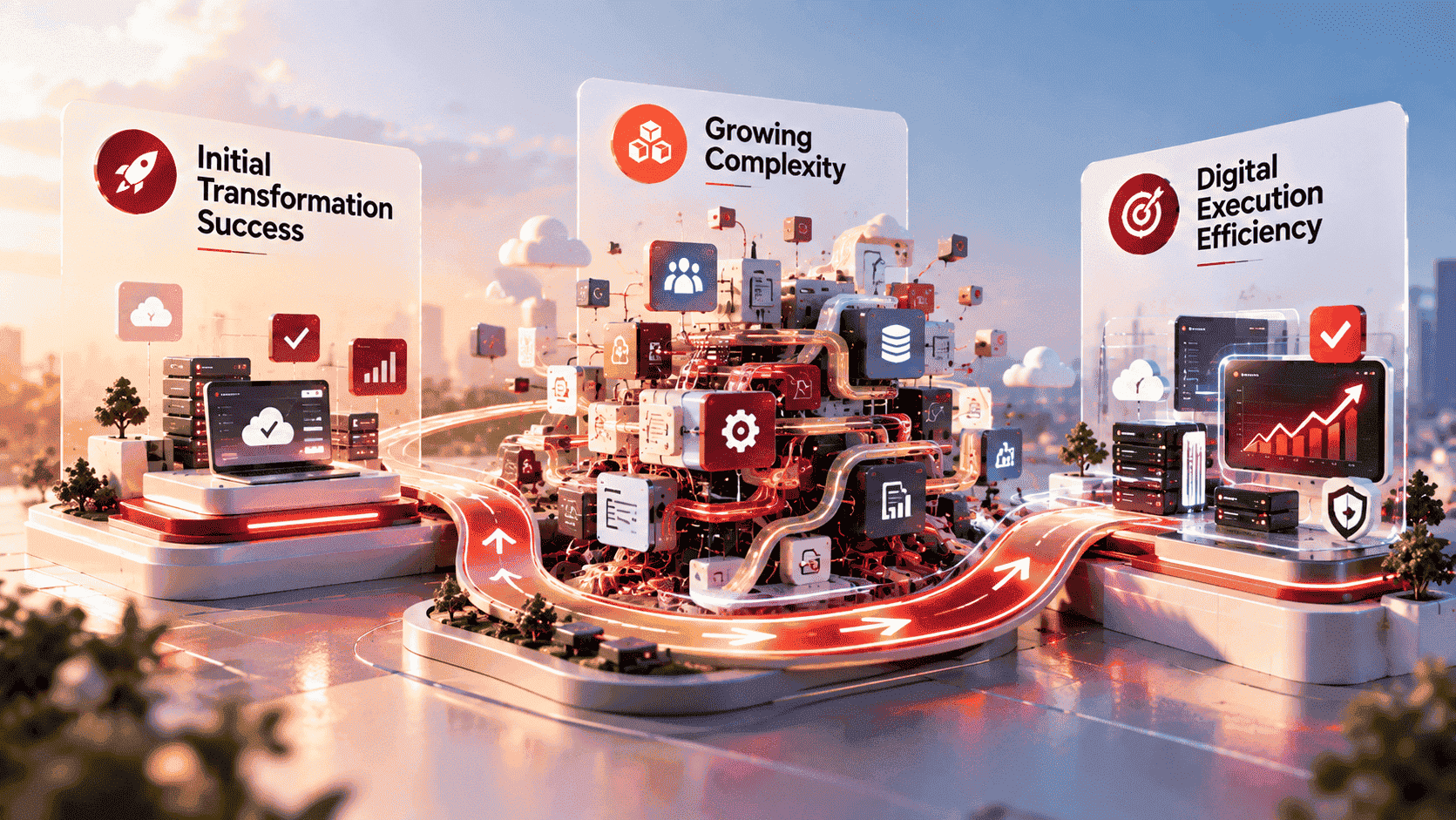












Many organizations rely on a small group of highly experienced individuals to keep technology running after go live. These teams often possess deep operational knowledge, resolve incidents quickly, and maintain business continuity during periods of rapid change. While this approach may appear effective in the short term, it becomes increasingly difficult to sustain as technology environments expand.
As organizations grow, technology becomes more integrated into business operations, introducing greater complexity, higher service expectations, and increased operational risk. When operational success depends on a handful of individuals, organizations become vulnerable to knowledge loss, inconsistent execution, and reduced scalability.
Building sustainable IT operations requires organizations to move beyond hero driven execution and establish repeatable operational structures that support long term stability, governance, and continuous improvement.
Organizations that invest in operational maturity are better positioned to scale technology while maintaining reliability and reducing operational risk.
What Are Sustainable IT Operations
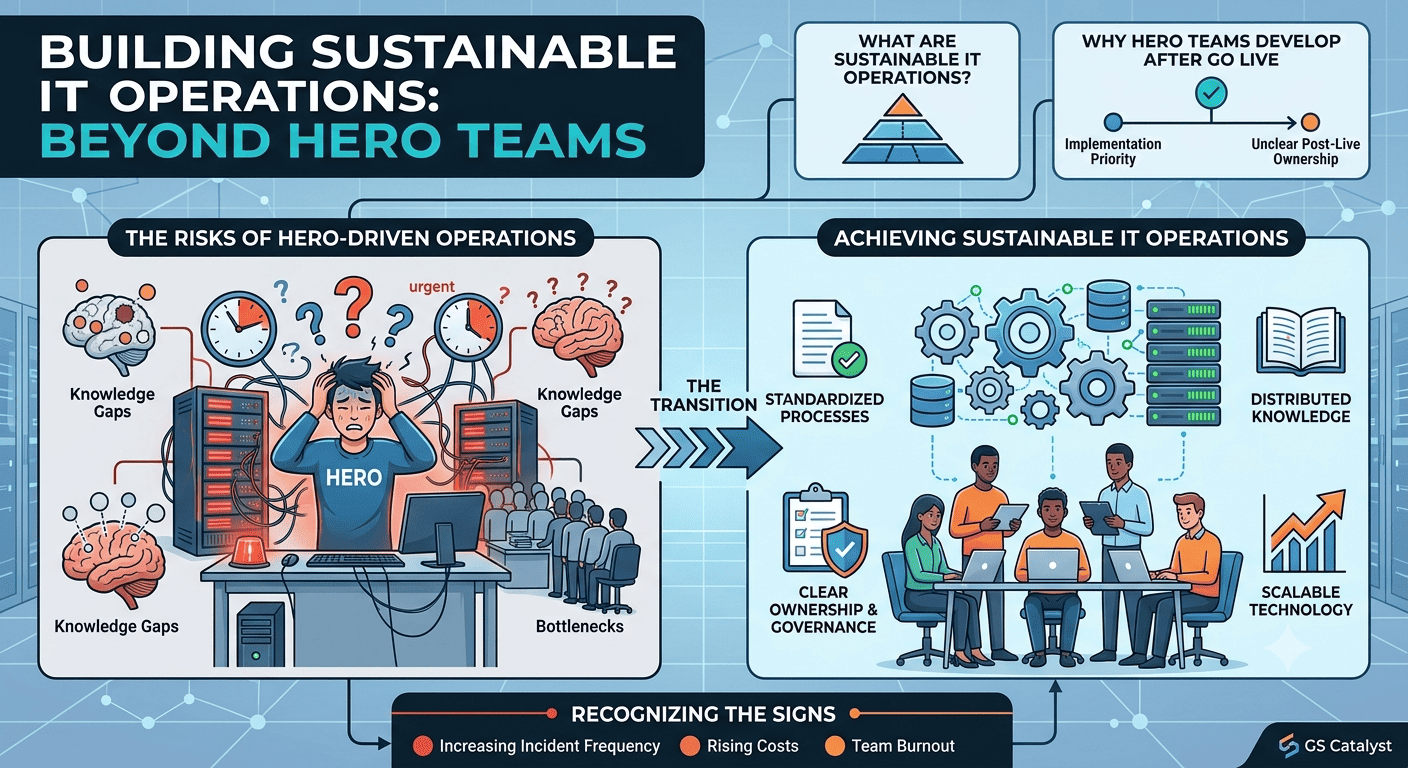
Sustainable IT operations refer to the operational structures, governance mechanisms, processes, and capabilities that enable organizations to operate technology consistently without relying on individual expertise.
Rather than depending on a few highly experienced team members to solve every operational issue, sustainable operations distribute knowledge, standardize execution, and establish clear ownership across technology environments.
A mature operational model enables organizations to support technology reliably as systems, teams, and business requirements continue to evolve.
Without sustainable operations, organizations often experience recurring operational issues, increasing support costs, and growing dependence on hero teams to maintain service quality.
Why Hero Teams Develop After Go Live
Hero teams rarely emerge intentionally. They are usually created when organizations prioritize implementation while giving less attention to long term operational management.
Organizations frequently encounter situations such as:
unclear ownership after systems move into production
incomplete operational processes and documentation
increasing pressure to maintain system availability
growing operational complexity without structured governance
As these challenges accumulate, a small group of experienced individuals naturally becomes responsible for resolving the majority of operational issues.
This approach may sustain operations temporarily, but it often conceals deeper structural weaknesses that become increasingly difficult to manage as technology environments grow.
The operational challenges that create hero dependency are introduced in Enterprise Process Optimization for Sustainable Delivery Performance, which explains how standardized operational processes improve long term delivery performance.
Common Risks of Hero Driven Operations
Organizations that depend heavily on hero teams often experience similar operational risks as technology environments become more complex.
1. Knowledge Concentration
Critical operational knowledge becomes limited to a small number of individuals.
Organizations frequently experience:
undocumented operational procedures
limited knowledge sharing across teams
increased onboarding time for new team members
Knowledge concentration reduces organizational resilience and increases operational risk.
2. Operational Bottlenecks
Hero teams often become the default escalation point for incidents, operational decisions, and system changes.
This frequently results in:
delayed operational decisions
slower incident resolution during peak periods
reduced responsiveness as workloads increase
As technology scales, operational bottlenecks become increasingly difficult to manage.
3. Team Burnout and Reduced Resilience
Constant firefighting places significant pressure on experienced operational staff.
Organizations may experience:
increased employee fatigue and turnover
declining operational consistency
reduced capacity for continuous improvement initiatives
Sustainable operations require balanced workloads rather than continuous reactive support.
4. Increasing Operational Risk
When operational success depends on individuals instead of repeatable processes, organizations become more vulnerable to service disruption.
Common risks include:
inconsistent operational execution
greater dependency on individual availability
reduced ability to scale technology environments confidently
A mature operating model minimizes these risks through standardized governance and operational controls.
How Organizations Build Sustainable IT Operations
Organizations that successfully transition away from hero driven operations focus on building operational capabilities rather than relying on individual effort.
Successful organizations typically:
establish clear ownership and accountability after go live
standardize operational processes across teams
improve visibility into operational performance and service quality
strengthen governance and decision making across technology environments
These improvements create a more predictable operational environment that supports long term business growth while reducing operational risk.
The importance of strengthening operational governance through structured risk management is explored further in Enterprise Delivery Stability Through Risk Governance, which explains how organizations improve operational resilience as technology environments become more complex.
Recognizing When Hero Teams Are No Longer Sustainable
Organizations often recognize the need for operational transformation when recurring issues begin affecting business performance.
Common indicators include:
increasing incident frequency after go live
growing dependence on a small number of individuals
rising operational costs without measurable improvement
declining confidence in operational decision making and service quality
Recognizing these signals early enables organizations to improve operational maturity before hero dependency becomes a significant business risk.
Read More: Enterprise Execution Maturity for Scalable Digital Transformation
Key Takeaways
Building sustainable IT operations requires organizations to move beyond hero driven execution and establish repeatable operational structures that support long term reliability, governance, and scalability.
By strengthening ownership, operational processes, governance, and organizational knowledge, organizations can reduce operational risk while improving their ability to support technology at scale.
Organizations that invest in operational maturity are better positioned to sustain digital transformation and support future business growth with confidence.
Frequently Asked Questions
What are sustainable IT operations
Sustainable IT operations are structured operational practices that enable organizations to manage technology consistently through standardized processes, governance, ownership, and continuous improvement rather than relying on individual expertise.
Why are hero teams a risk for technology operations
Hero teams create knowledge silos, operational bottlenecks, burnout, and dependency on a small number of individuals, making technology operations more difficult to scale and maintain over time.
How can organizations build sustainable IT operations
Organizations can build sustainable IT operations by establishing clear ownership, standardizing operational processes, strengthening governance, improving operational visibility, and reducing dependency on individual knowledge.
Build Sustainable IT Operations That Scale with Your Business
Long term operational success depends on more than dedicated teams. GSCatalyst helps organizations strengthen operational maturity, design scalable operating models, and establish governance structures that enable sustainable IT operations as technology environments continue to grow.
Explore how GS Catalyst can help you build sustainable IT operations that support long term business growth.