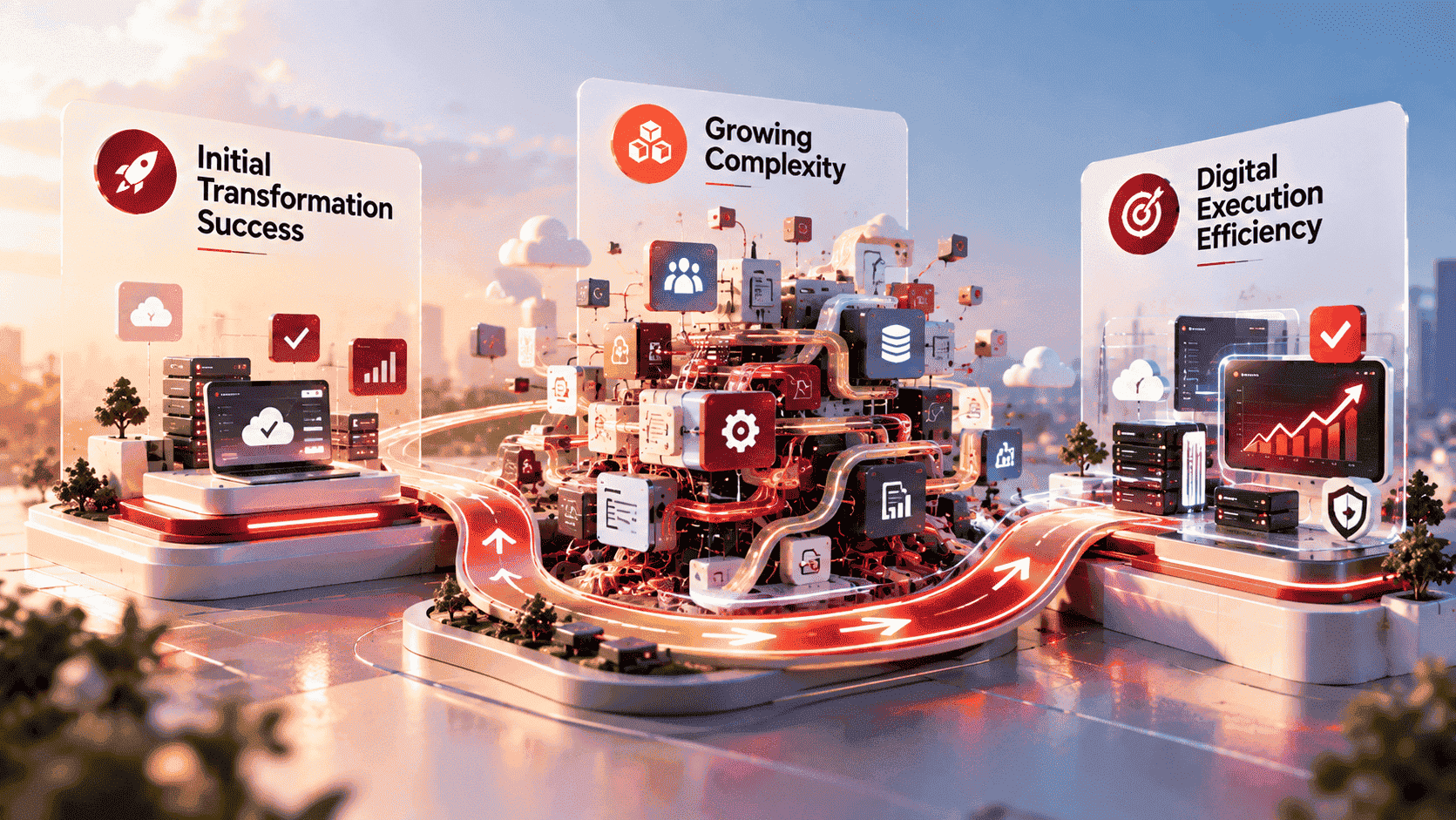












Many organizations discover that IT teams struggle after go live, particularly when operational responsibilities begin to expand beyond the original implementation scope. During deployment, technology initiatives typically operate within structured timelines, defined responsibilities, and dedicated project support. Once systems move into daily operations, however, the nature of the work changes significantly.
What appeared stable during implementation often becomes more difficult to manage as user adoption increases, operational dependencies expand, and business expectations continue to grow. IT teams must support ongoing operations while simultaneously responding to incidents, implementing changes, and maintaining service reliability.
In many cases, these operational challenges are not caused by the technology itself. Instead, they emerge because organizations have not established scalable operational structures capable of supporting technology after launch.
Organizations that successfully manage post launch operations recognize that sustainable delivery depends not only on implementation quality but also on how operational responsibilities are designed, governed, and maintained over time.

What Are Post Go Live Operations
Post go live operations refer to the ongoing management, support, governance, monitoring, and optimization activities required after technology systems move into production environments.
These operational responsibilities include maintaining system stability, managing incidents, supporting users, implementing changes, monitoring performance, and ensuring that technology continues supporting business requirements as complexity increases.
As organizations scale, post go live operations become significantly more demanding due to increasing dependencies, integrations, user expectations, and operational risks. Without structured operational management, technology environments often become difficult to maintain efficiently.
This is one of the primary reasons why many IT teams struggle after go live as technology environments expand beyond their original implementation scope.
Why IT Teams Struggle After Go Live
IT teams struggle after go live because operational complexity increases significantly once technology systems transition from implementation into daily operations.
Organizations often rely on informal operational processes, reactive support structures, and unclear ownership models that cannot scale effectively as business dependence on technology grows.
Common operational challenges include:
unclear accountability for production systems and support activities
reactive incident management and escalating operational workload
conflicting priorities between project delivery and operational support
limited visibility into operational dependencies and service risks
As operational complexity grows, these issues become increasingly difficult to manage through effort alone.
A broader explanation of how operational challenges emerge after deployment is explored in Post Go Live Challenges Why Technology Fails After Launch, which explains why many organizations encounter operational instability after implementation.
Why Post Go Live Operations Become Increasingly Complex
Post launch operational challenges rarely remain static. As technology becomes more integrated into business operations, the demands placed on IT teams continue to increase.
Organizations frequently experience:
growing dependence on system availability across business functions
increasing integration complexity between platforms and services
rising operational risk as environments scale and evolve
higher expectations for responsiveness, stability, and continuous improvement
Without structured operational processes and governance, IT teams are forced into reactive operational patterns that reduce efficiency and increase operational risk.
This complexity often grows gradually, making it difficult for organizations to recognize operational weaknesses until service quality and delivery performance begin to decline.
Common Reasons IT Teams Struggle After Go Live
Organizations that struggle to support technology at scale often encounter similar operational limitations. These gaps are typically related to ownership, governance, operational processes, and resource management.
1. Unclear Operational Ownership
Many organizations establish strong project governance during implementation but fail to define accountability once systems move into production environments.
Without clear ownership:
operational decisions become delayed or inconsistent
responsibilities overlap across teams
support escalations become difficult to manage effectively
Clear operational ownership is essential for maintaining accountability and service continuity after go live.
2. Reactive Operational Processes
IT teams often rely on reactive support models that prioritize immediate issue resolution rather than long term operational stability.
Organizations frequently experience:
recurring incidents without root cause resolution
operational bottlenecks caused by manual processes
inconsistent operational procedures across teams
As operational complexity increases, reactive processes create additional workload and reduce operational efficiency.
3. Limited Resource Visibility and Coordination
Technology operations become increasingly difficult when organizations lack visibility into resource allocation, operational workload, and support dependencies.
Common challenges include:
limited understanding of operational capacity requirements
overreliance on specific individuals or teams
difficulty balancing project delivery with operational responsibilities
Without structured resource management, IT teams often struggle to sustain operational performance as demand increases.
4. IT Operating Models That Do Not Scale
Operating technology at scale requires repeatable operational structures that support consistency, governance, and continuous improvement.
Organizations that lack a scalable IT operating model often experience:
inconsistent operational execution across teams
growing operational complexity as environments expand
dependence on individual expertise instead of standardized processes
As systems evolve, these limitations increase operational fragility and reduce the ability to scale effectively.
How Organizations Support Sustainable IT Operations
Organizations that successfully support IT teams after go live treat operations as a long term strategic capability rather than a short term support activity.
Successful organizations typically focus on:
defining ownership and accountability across operational environments
establishing repeatable operational processes and governance controls
improving visibility into operational performance and service risk
aligning operational responsibilities with business priorities and delivery goals
This structured approach enables IT teams to operate more consistently while reducing operational friction and long term risk.
The importance of improving operational consistency and delivery performance is explored further in Enterprise Process Optimization for Sustainable Delivery Performance, which explains how organizations strengthen operational efficiency at scale.
Recognizing Early Signs of Operational Strain
Organizations can often identify operational weaknesses before they become significant disruptions.
Common indicators include:
increasing incident volumes without long term resolution
growing dependence on a small number of experienced individuals
inconsistent operational execution across support teams
declining visibility into operational performance and workload
Recognizing these signals early allows organizations to strengthen operational structures before operational strain begins affecting delivery quality and business outcomes.
👉 Read More:
Enterprise IT Resource Management for Long Term Operational Efficiency
Key Takeaways
Many organizations discover that IT teams struggle after go live because operational environments become significantly more complex once systems move into production. Increasing workloads, growing dependencies, and unclear operational structures create pressure that cannot be solved through effort alone.
Organizations that establish clear ownership, scalable operational processes, governance mechanisms, and structured resource management are better positioned to support sustainable operations after launch.
By strengthening operational design early, organizations can reduce operational risk, improve delivery consistency, and enable IT teams to operate technology at scale more effectively.
Frequently Asked Questions
Why do IT teams struggle after go live
IT teams often struggle after go live because operational responsibilities increase rapidly while ownership, governance, and operational processes remain unclear or inconsistent.
What are post go live operations
Post go live operations refer to the ongoing support, governance, monitoring, maintenance, and optimization activities required after technology systems move into production environments.
How can organizations improve IT operations after go live
Organizations can improve post go live operations by establishing clear ownership, strengthening governance, optimizing operational processes, and improving visibility into operational performance and resource management.
Build Operational Structures That Support IT Teams at Scale
Sustainable technology operations require more than successful implementation. GSCatalyst helps organizations establish scalable operational structures, governance models, and resource management approaches that enable IT teams to support technology reliably after go live.