











When Strategy and Execution Need Structural Support
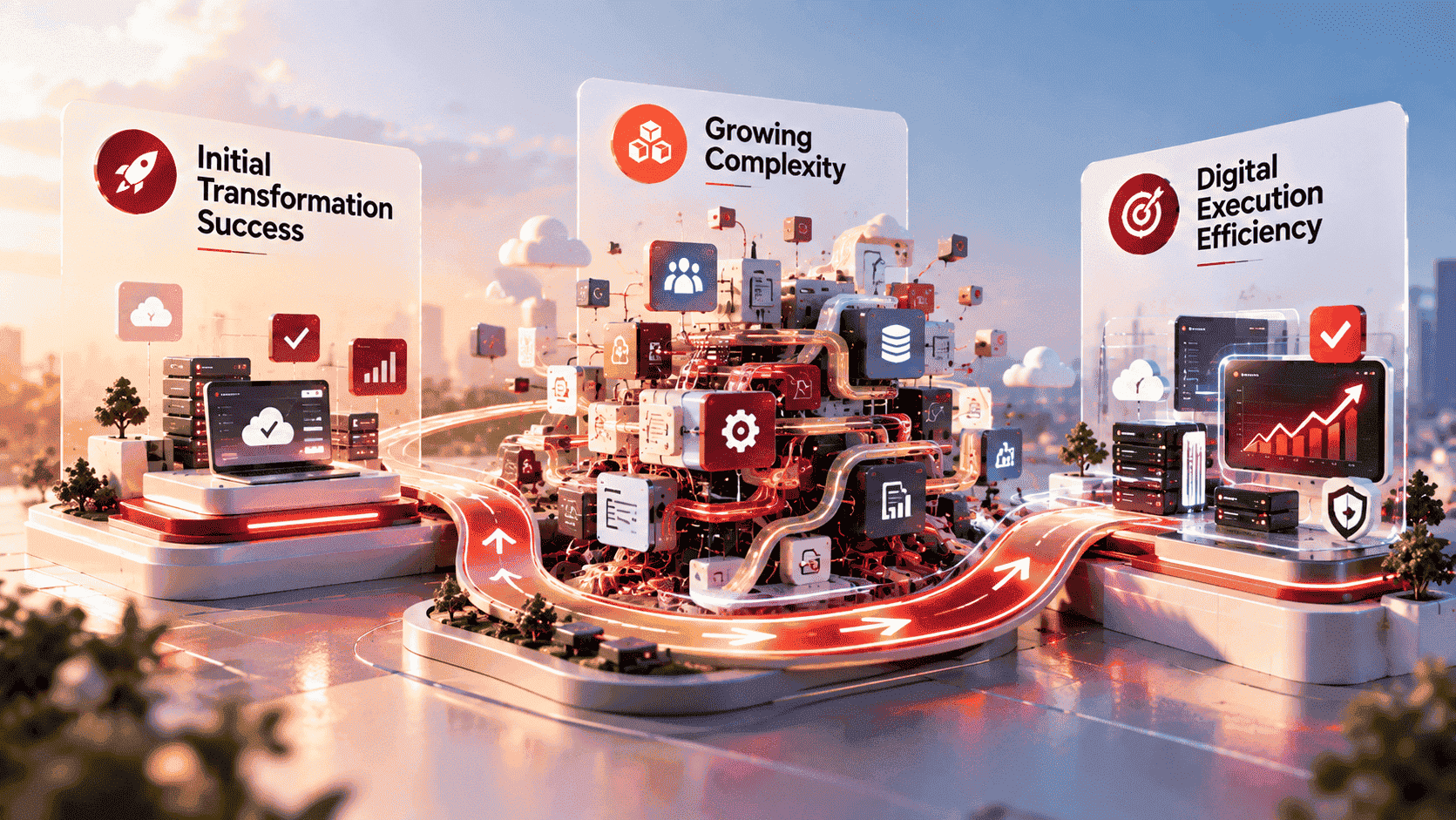
A well defined technology strategy and roadmap provide direction for digital transformation. However, strategy and planning alone do not guarantee successful implementation. Many organizations discover that their initiatives slow down once execution begins.
The reason is often structural rather than technological. Teams, governance mechanisms, and delivery processes may not be designed to support large scale transformation initiatives. When operational structures cannot scale, digital initiatives become inconsistent and difficult to sustain.
A well designed technology operating model provides the structural foundation needed to translate strategy into coordinated execution. It defines how technology decisions are made, how teams collaborate, and how delivery responsibilities are distributed across the organization.
As organizations move from planning toward implementation, designing a scalable IT operating model becomes a critical success factor for sustainable digital transformation.

How a Technology Operating Model Enables Consistent Execution
A technology operating model defines how an organization structures governance, decision making, and delivery processes across business and technology teams.
Rather than focusing only on organizational charts, a strong digital operating model clarifies:
Decision making authority across technology initiatives
Roles and responsibilities between business and IT teams
Delivery and collaboration models across cloud, security, and data teams
Governance structures that guide technology investments
When these elements are clearly defined, organizations can sustain technology transformation execution across multiple initiatives without increasing operational complexity.
The connection between strategy and execution structures is explored in Technology Strategy Execution: Turning Strategy into Action, where organizations translate strategic priorities into practical execution mechanisms.
Why Execution Breaks Without the Right Operating Structure
Even well designed strategies struggle to deliver results when the underlying operating structure does not support execution.
Organizations frequently encounter challenges such as:
Unclear decision authority across technology initiatives
Teams operating independently without shared governance
Conflicting priorities across departments
Technology delivery disconnected from business outcomes
Without a scalable technology operating model, organizations find it difficult to maintain consistent IT strategy execution across transformation initiatives.
Over time these structural gaps increase coordination complexity and slow digital transformation progress.
Key Design Principles for a Scalable Technology Operating Model
Organizations that successfully design a technology operating model framework typically focus on several essential principles.
1. Clear Governance and Decision Rights
A scalable technology governance model begins with clarity around who owns technology decisions.
Organizations must define:
Who owns technology outcomes across initiatives
Which decisions are centralized versus decentralized
How priorities are approved and reviewed
Clear governance structures remove ambiguity and enable faster execution.
2. Alignment Between Business and Technology
Technology initiatives must remain aligned with business priorities.
A strong digital operating model ensures that:
Technology initiatives support business capabilities
Accountability is shared between business leaders and IT teams
Technology planning is embedded within business strategy discussions
This alignment ensures that execution remains outcome driven.
3. Consistent Delivery and Collaboration Models
Organizations must define how work is delivered across teams.
Delivery structures may include:
Product based delivery teams
Project based transformation initiatives
Hybrid delivery models
Consistency in delivery models allows organizations to scale technology operations without introducing unnecessary complexity.
4. Talent and Capability Enablement
Operating models must reflect the organization’s real capabilities.
Key considerations include:
Whether teams possess the skills required for modern technology platforms
Whether roles and responsibilities are clearly defined
Whether training and enablement support transformation initiatives
Capability gaps can significantly slow technology transformation execution.
5. Performance Management and Accountability
A scalable IT operating model requires measurable outcomes.
Organizations should define:
Performance indicators tied to business and technology outcomes
Ownership for delivery results
Regular performance reviews and feedback loops
These mechanisms reinforce accountability and continuous improvement.
Finding the Right Balance Between Governance and Agility
There is no universal operating model that works for every organization. Most mature enterprises adopt a federated structure that balances governance with flexibility.
In this model:
Core platforms and governance standards are centralized
Execution and innovation are distributed closer to business teams
This balance allows organizations to maintain consistent governance while supporting innovation and agility across departments.
The broader concept of operating model design is explored further in What Is an Operating Model and Why It Matters at Scale, which explains how operating structures evolve as organizations grow.
Signs Your Operating Model Is Limiting Technology Scale
Organizations that lack a well designed scalable IT operating model often experience operational signals that their structure is limiting transformation progress.
Common indicators include:
Repeated delays in technology initiative delivery
Unclear ownership of digital transformation programs
Coordination challenges between technology teams
Increasing operational complexity as initiatives scale
Recognizing these signals early allows organizations to redesign their technology operating model before structural limitations slow digital transformation progress.
Execution frameworks that integrate governance, delivery, and performance measurement are explored further in the article below.
👉 Read More
From Planning to Performance: A Practical IT Execution Framework for Enterprises
Key Takeaways
A well designed technology operating model provides the structural foundation required to sustain digital transformation. By defining governance structures, delivery models, and accountability mechanisms, organizations can scale technology initiatives while maintaining operational discipline.
Organizations that invest in a scalable IT operating model are better positioned to coordinate transformation initiatives, reduce operational complexity, and deliver measurable business outcomes.
Frequently Asked Questions
What is a technology operating model
A technology operating model defines how an organization structures governance, decision making, and delivery processes in order to manage technology initiatives across business and IT teams.
Why is a technology operating model important
A scalable technology operating model enables organizations to execute digital transformation initiatives consistently while maintaining governance, accountability, and operational efficiency.
What makes a technology operating model scalable
A scalable IT operating model includes clear governance structures, aligned business and technology teams, consistent delivery models, and measurable performance management mechanisms.
Build an Operating Model That Supports Execution
A strong operating model allows organizations to scale technology initiatives without increasing complexity or operational risk. GSCatalyst helps enterprises design technology operating models that align governance, delivery structures, and transformation priorities.