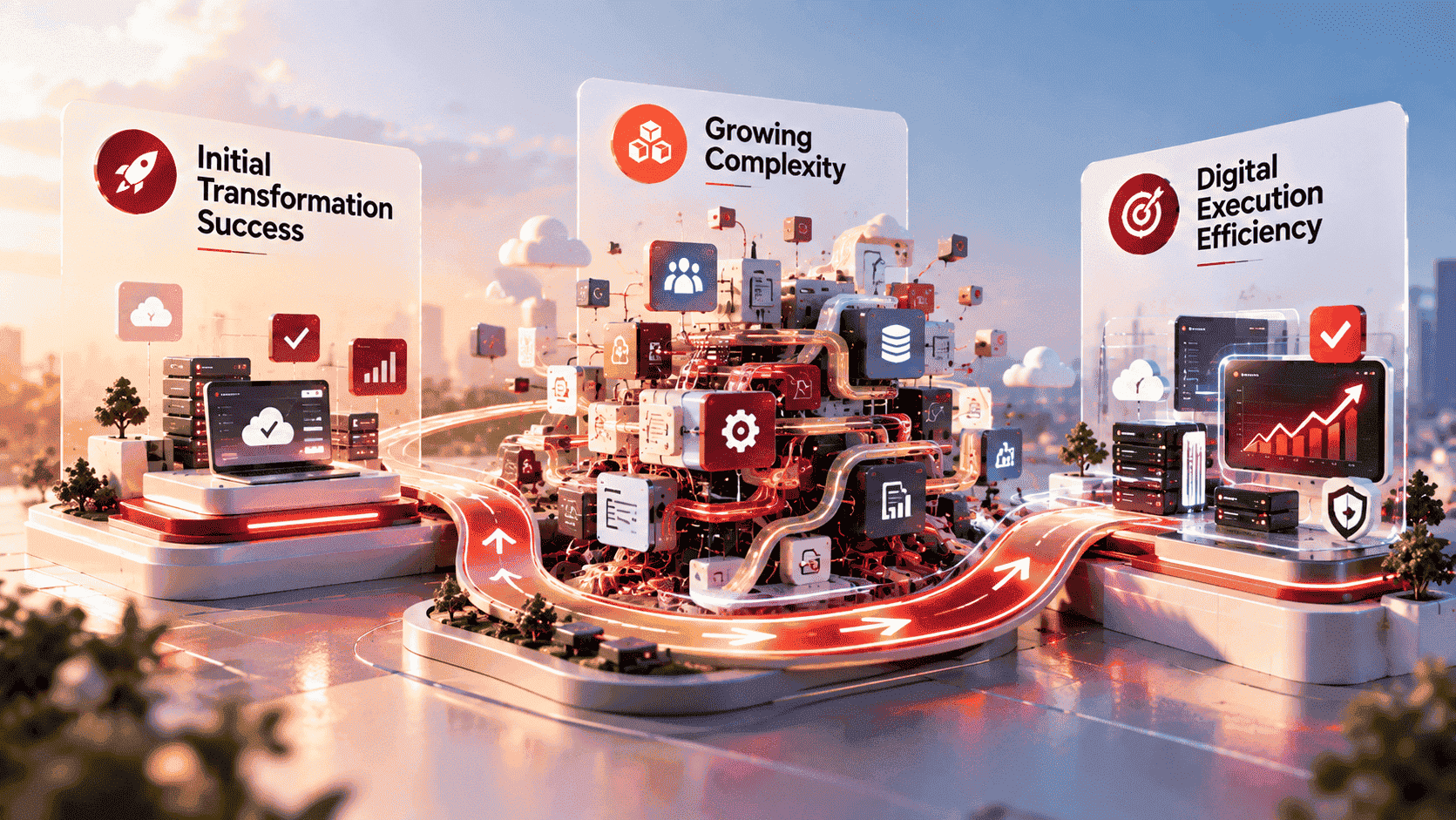












Many organizations assume that the most difficult phase of a technology initiative ends at launch. After months of planning, implementation, testing, and deployment, go live is often viewed as the finish line. In reality, however, this is where many organizations begin to encounter the most significant operational challenges.
While systems may perform well immediately after deployment, the real test begins when technology becomes part of daily business operations. User adoption increases, transaction volumes grow, operational dependencies expand, and support teams become responsible for maintaining stability and performance.
This is why many organizations experience post go live challenges that were not visible during implementation. Technology that appears successful at launch can struggle to deliver long term value when operational processes, ownership structures, and governance mechanisms are not designed to support scale.
Organizations that succeed after launch recognize that go live is not the end of a project. It is the beginning of an ongoing operational responsibility.

What Are Post Go Live Challenges
Post go live challenges refer to the operational, governance, performance, and support issues that emerge after a technology solution moves from implementation into day to day operations.
These challenges occur when organizations focus heavily on delivering projects successfully but invest less attention in how technology will be operated, maintained, and improved after launch. As systems become embedded within business processes, operational complexity increases and previously hidden weaknesses begin to surface.
Common examples include unclear ownership, inconsistent support processes, growing operational risks, performance degradation, and increasing dependence on a small number of key individuals.
While these issues may not be visible during implementation, they often become major barriers to long term success once technology begins operating at scale.
A structured approach to managing post go live challenges is essential for organizations seeking sustainable technology adoption and operational stability.
Why Post Go Live Challenges Matter
Technology initiatives are typically measured against project milestones such as implementation timelines, budget adherence, and successful deployment. While these outcomes are important, they do not guarantee long term operational success.
Organizations frequently encounter challenges such as:
increasing user volumes and transaction loads
growing integration complexity across systems
expanding support and maintenance requirements
rising expectations for reliability and performance
Without a structured approach to technology operations management, these pressures accumulate over time and create operational instability.
Technology often fails after go live not because the implementation was unsuccessful, but because the organization was not prepared to support ongoing operations at scale.
The relationship between execution planning and sustainable delivery is explored in Technology Strategy Execution Turning Strategy into Action, which explains how organizations connect strategic initiatives to practical execution models.
Common Causes of Post Go Live Failure
Organizations that struggle after launch often experience similar operational challenges. While symptoms vary across industries and technologies, the underlying causes are usually related to governance, ownership, visibility, and operational design.
1. Lack of Operational Ownership
Many organizations establish strong project ownership during implementation but fail to define accountability once systems transition into production.
Without clear ownership:
operational issues remain unresolved
responsibilities become unclear across teams
decision making slows during incidents and service disruptions
Clear ownership is critical for maintaining performance and accountability after go live.
2. Weak Governance and Support Models
Technology environments become increasingly complex as organizations grow. Without governance structures that extend beyond implementation, operational consistency becomes difficult to maintain.
Organizations often struggle with:
inconsistent support processes across teams
unclear escalation procedures
fragmented governance responsibilities
Weak governance creates operational risk and limits the ability to scale technology effectively.
3. Limited Visibility into Performance and Risk
Organizations cannot improve what they cannot measure. Many post go live challenges emerge because teams lack visibility into operational performance, service quality, and emerging risks.
Common issues include:
limited monitoring and reporting capabilities
delayed identification of recurring issues
insufficient understanding of operational dependencies
Without operational visibility, problems often grow unnoticed until they begin affecting business outcomes.
4. Operational Processes That Do Not Scale
Processes that work during initial deployment often become ineffective as technology usage expands.
Organizations frequently encounter:
inconsistent incident management practices
manual operational activities that create bottlenecks
growing dependence on individual expertise rather than documented processes
As complexity increases, these limitations make it increasingly difficult to support reliable technology operations.
How Organizations Build Sustainable Operations
Organizations that successfully overcome post go live challenges treat operations as a strategic capability rather than a support function.
Successful organizations typically:
define ownership and accountability beyond implementation
establish consistent operational processes and governance controls
continuously monitor performance, risk, and service quality
create mechanisms for ongoing improvement and optimization
This approach enables technology environments to remain stable, scalable, and aligned with business objectives over time.
As organizations mature their operational capabilities, maintaining momentum after implementation becomes increasingly important. The challenges associated with sustaining performance and operational discipline are explored further in Digital Execution Efficiency After Initial Transformation Success, which examines how organizations maintain execution quality after achieving initial transformation goals.
Common Indicators of Post Go Live Challenges
Organizations can often identify operational weaknesses before they become significant disruptions.
Common indicators include:
recurring incidents that continue without root cause resolution
increasing dependence on a small number of individuals
inconsistent operational processes across teams
declining visibility into performance, risks, and service quality
Recognizing these signals early allows organizations to strengthen operational structures before technology performance begins to deteriorate.
👉 Read More: Why IT Teams Struggle After Go Live
Key Takeaways
Many organizations focus heavily on implementation while underestimating the operational challenges that emerge after launch. As systems move into production environments, increasing complexity, growing dependencies, and evolving business requirements place new demands on technology teams.
Addressing post go live challenges requires more than technical expertise. Organizations must establish clear ownership, structured operational processes, and governance mechanisms that support long term scalability and reliability.
Organizations that invest in sustainable operations are better positioned to prevent situations where technology fails after go live and instead create technology environments that continue delivering value as the business grows.
Frequently Asked Questions
What are post go live challenges
Post go live challenges are operational, governance, and performance issues that emerge after a technology solution moves from implementation into day to day operations.
Why does technology fail after go live
Technology often fails after go live because organizations focus on implementation success without establishing the operational structures, governance, and ownership required to support long term performance.
How can organizations manage post go live challenges effectively
Organizations can manage post go live challenges by establishing clear ownership, strengthening governance, implementing scalable operational processes, and continuously monitoring performance and risk.
Build Technology Operations That Scale Beyond Launch
Successful technology initiatives depend on more than implementation. GSCatalyst helps organizations design operational structures, governance models, and performance management approaches that support sustainable growth long after go live.