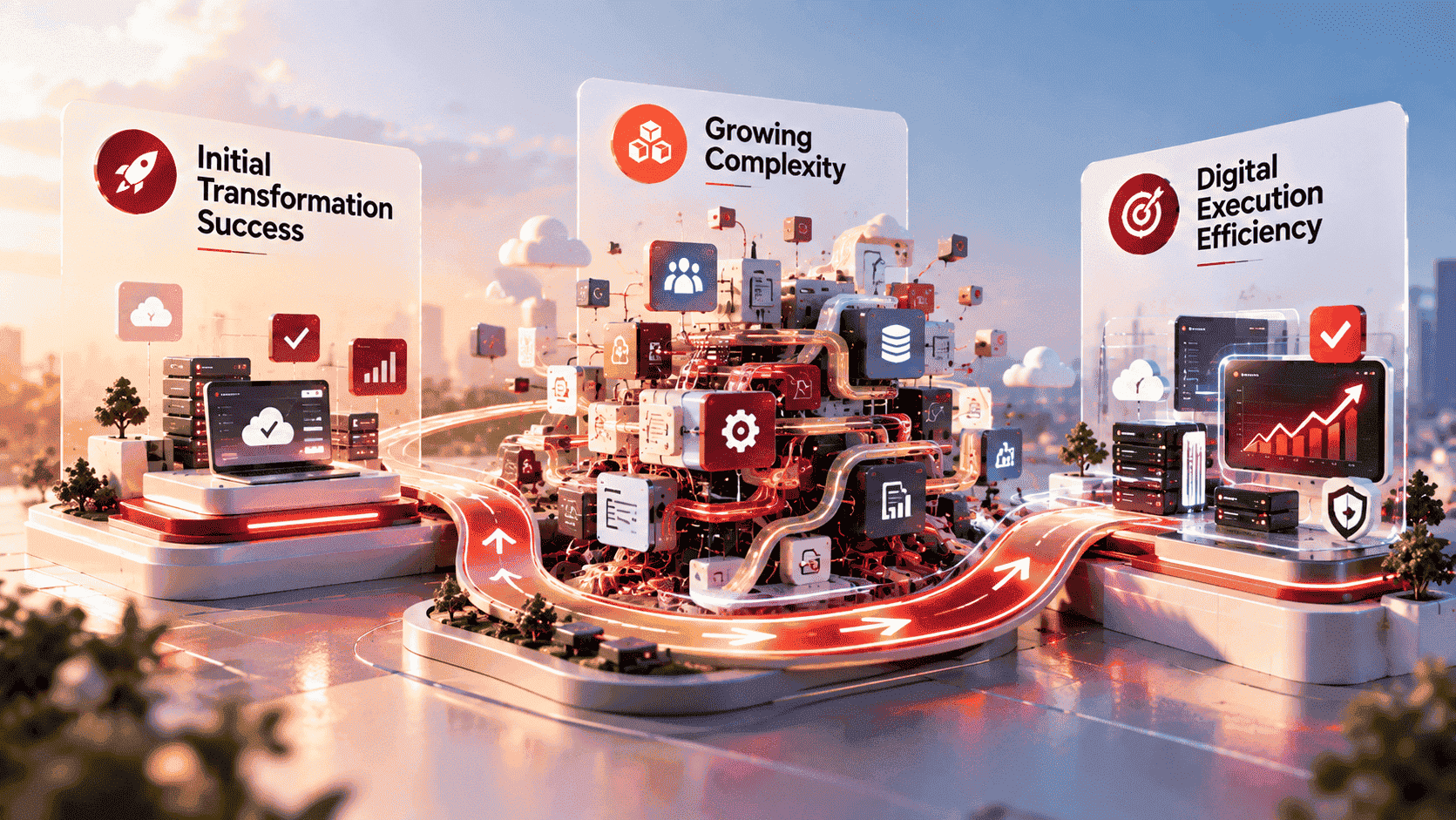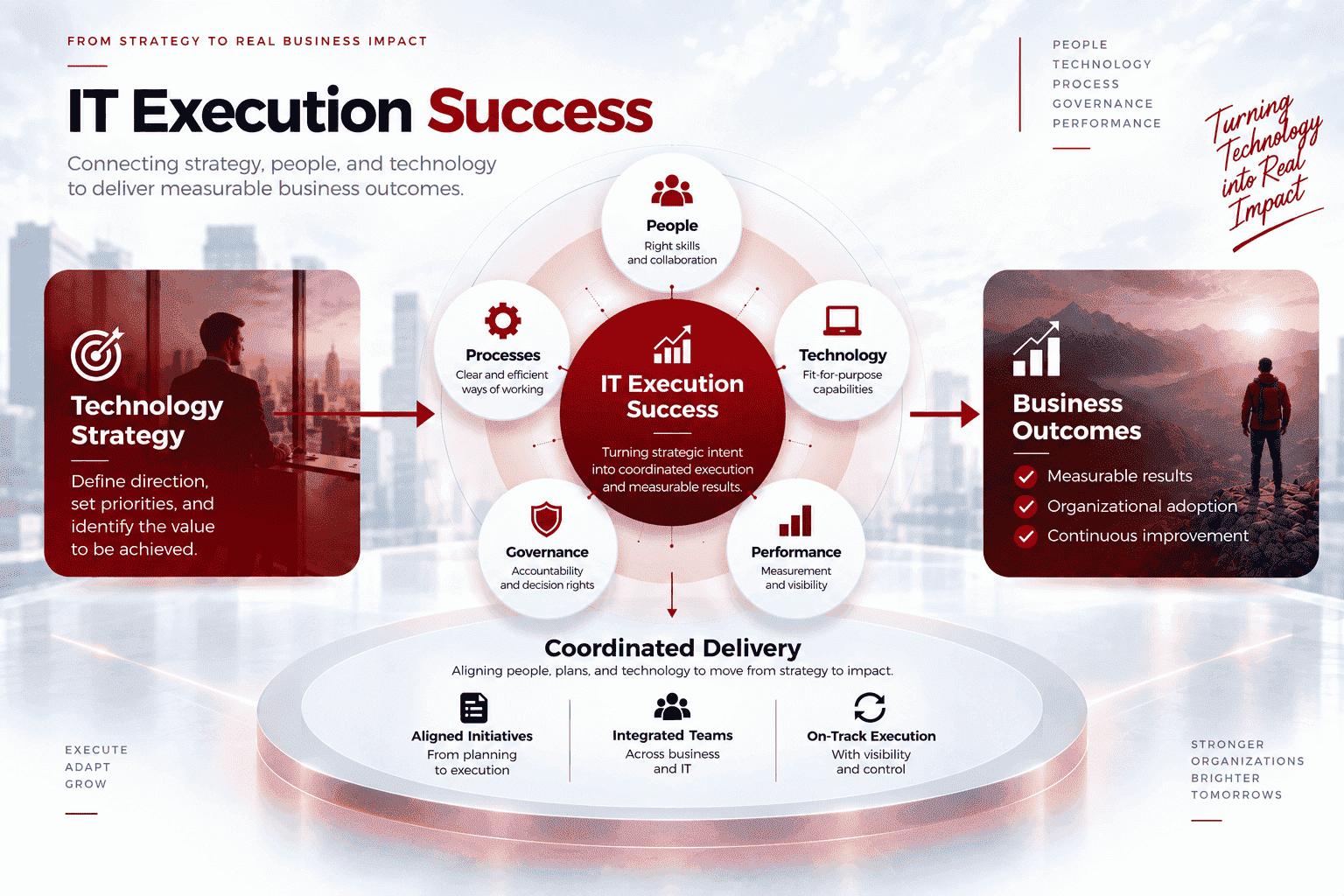












Business and IT teams often share the same organizational goals, but their priorities do not always align. Business leaders focus on growth, operational efficiency, and customer experience, while IT teams are responsible for technology investments, infrastructure, security, and system performance.
When these priorities are disconnected, enterprises may invest in technology that does not fully address business needs. Projects can experience delays, resources may be misallocated, and digital initiatives may struggle to deliver measurable business value.
Strong business IT alignment helps organizations connect technology decisions with business objectives. It requires more than involving IT in strategic discussions. Enterprises need shared planning, clear governance, continuous collaboration, and performance measurement to ensure technology initiatives support long-term business outcomes.

What Is Business IT Alignment?
Business IT alignment is the process of ensuring that an organization's technology strategy, investments, and operations support its business objectives.
It connects business priorities with IT planning and execution. Rather than treating technology as a separate function, enterprises integrate IT into strategic decision-making and operational planning.
For example, when a company aims to improve customer experience, its IT strategy should support that objective through appropriate systems, data capabilities, and digital services. Technology initiatives should be evaluated based on how they contribute to business outcomes, not only whether they meet technical requirements.
Effective alignment also requires ongoing communication between business and IT teams. Both functions need a shared understanding of priorities, constraints, responsibilities, and expected results.
Why Business IT Alignment Matters for Enterprises
As enterprises become increasingly dependent on digital capabilities, the relationship between business strategy and IT execution becomes more important.
Connecting Technology Investments With Business Priorities
Technology investments often involve significant budgets, resources, and organizational changes. Without clear alignment, enterprises risk prioritizing initiatives that offer limited business value.
A structured approach helps decision-makers evaluate technology investments based on business objectives, expected outcomes, and available resources.
Before selecting platforms or launching new initiatives, organizations need to understand the business problems they want to solve. This is why technology decisions should be guided by a clear strategic direction. Read Why Tech Strategy Matters Before Choosing Tools to explore how strategy can guide technology selection.
Improving Collaboration Between Business and IT Teams
Business and IT teams often have different perspectives on what success looks like. Business teams may prioritize revenue, customer experience, and operational efficiency, while IT teams focus on system reliability, security, and technical delivery.
These priorities are not inherently in conflict, but they need to be connected through regular communication and shared planning.
When both teams participate in defining objectives and evaluating progress, they can identify dependencies earlier, make informed trade-offs, and reduce misunderstandings during execution.
Supporting Digital Transformation
Digital transformation involves more than adopting new technologies. It often requires changes to business processes, operating models, employee responsibilities, and performance measurement.
Without business IT alignment, transformation initiatives can become disconnected from operational needs. Technology may be implemented successfully but fail to produce the intended business improvements.
Alignment helps enterprises connect transformation goals with execution plans, ensuring that technology initiatives are supported by the people, processes, and governance needed to sustain them.
How Enterprises Can Build Strong Business IT Alignment
Establishing business IT alignment requires a coordinated approach across strategy, governance, execution, and performance management.

1. Establish Shared Business and IT Objectives
Business and IT leaders should begin by agreeing on the outcomes the organization wants to achieve. These objectives need to be specific enough to guide decision-making and help both teams evaluate whether technology initiatives are contributing to business priorities. For example, if the business aims to improve operational efficiency, IT initiatives should focus on supporting process improvements, reducing unnecessary complexity, and enabling better decision-making.
Establishing shared objectives gives business and IT teams a common direction and helps them prioritize technology investments based on organizational needs. It also creates a clearer basis for evaluating progress and ensuring that both functions remain focused on the same outcomes.
2. Integrate IT Into Business Planning
IT should be involved early in business planning rather than brought in only after decisions have been made. Early involvement allows IT leaders to assess technical feasibility, resource requirements, security considerations, and potential dependencies before initiatives move into execution. At the same time, business leaders gain a clearer understanding of technology constraints and opportunities, helping the organization develop more realistic plans and avoid unnecessary changes later.
However, planning alone is not enough. Enterprises also need a structured approach to translate business priorities into coordinated execution. The From Planning to Performance: A Practical IT Execution Framework for Enterprises article explores how organizations can connect strategic planning with delivery and performance management.
3. Define Clear Governance and Decision-Making Responsibilities
Effective business IT alignment depends on clear governance and decision-making structures. Enterprises should establish who is responsible for prioritizing initiatives, approving investments, managing risks, and resolving conflicts between business requirements and technical constraints. Clearly defined responsibilities help both teams understand their roles and make decisions with greater accountability.
Governance should provide direction without creating unnecessary bureaucracy. Regular governance reviews can help leadership maintain transparency, address issues, and determine whether initiatives require additional resources, revised priorities, or changes in scope. This ensures that technology initiatives remain connected to business objectives as they progress.
4. Encourage Continuous Collaboration
Business IT alignment is not a one-time planning exercise. Business priorities can change as market conditions, customer expectations, and operational requirements evolve. Regular communication between business and IT teams helps organizations respond to these changes while maintaining a shared understanding of strategic objectives.
Cross-functional planning sessions, shared progress reviews, and clear escalation processes allow teams to identify issues early and coordinate their responses. This ongoing collaboration is particularly important for initiatives involving multiple departments, shared systems, or changes to established business processes, where decisions made by one team can directly affect others.
5. Measure Performance Based on Business Outcomes
Technology projects should not be evaluated solely on whether they are delivered on time or within budget. While these measures are important for tracking project execution, they do not necessarily show whether an initiative has created meaningful business value. Enterprises should therefore define performance indicators that connect IT delivery with the outcomes the business expects.
Depending on the initiative, these indicators may include process efficiency, service quality, user adoption, or improvements in decision-making. Reviewing performance regularly helps leadership understand whether technology investments are delivering their intended results and identify where adjustments may be needed to improve business outcomes.
6. Review and Adapt Alignment as Priorities Change
Business IT alignment needs to evolve alongside the organization. A strategy that was appropriate at the beginning of a transformation may need to change as business objectives, technology capabilities, and operational requirements develop. Without regular reviews, technology initiatives may continue following outdated priorities that no longer reflect the organization's needs.
Periodic reviews allow business and IT leaders to reassess priorities, evaluate progress, and identify gaps between strategy and execution. This helps organizations make informed adjustments, redirect resources when necessary, and ensure that technology initiatives continue to support current business objectives.
What Business IT Alignment Looks Like in Practice
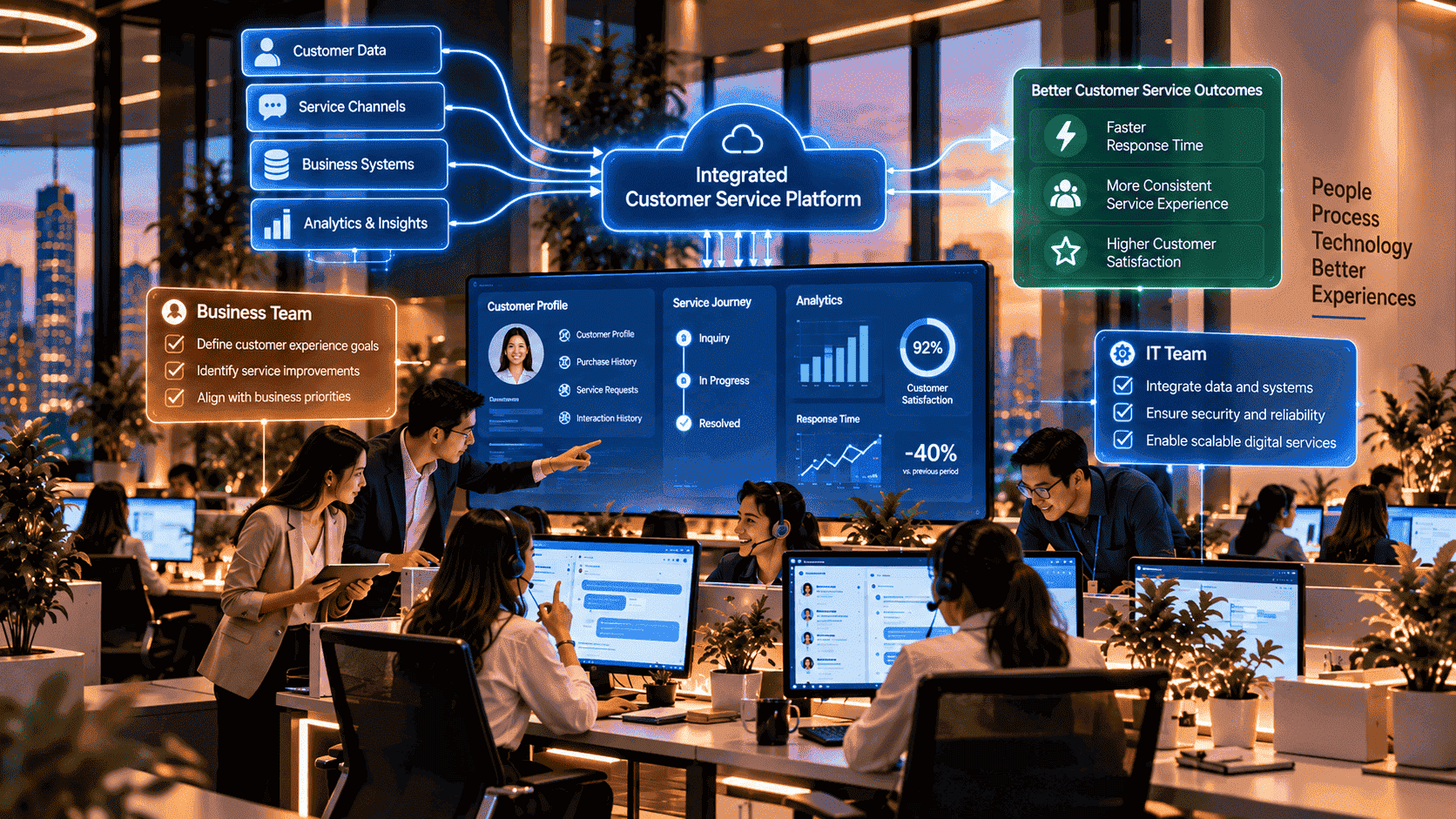
Consider an enterprise that wants to improve customer service across multiple business units.
The business objective may be to provide faster responses, improve service consistency, and give employees better access to customer information.
To support these goals, IT may need to integrate customer data, improve existing systems, or introduce a new service platform. However, technology implementation alone will not guarantee better service.
Business and IT teams need to work together to define requirements, identify process changes, establish responsibilities, and agree on how success will be measured.
During implementation, both teams should review progress and address issues that could affect the intended outcomes. After deployment, they should evaluate whether the new capabilities are improving service delivery and identify opportunities for further improvement.
This example illustrates how alignment connects business objectives with technology decisions, execution, and measurable results.
Turning Business IT Alignment Into Sustainable Performance
Strong business IT alignment helps enterprises ensure that technology investments support business priorities throughout planning and execution.
However, alignment cannot be maintained through strategy documents alone. It requires clear governance, shared objectives, continuous collaboration, and regular performance reviews.
As organizations mature, their operating models also need to support these practices. A well-defined technology operating model can help connect responsibilities, decision-making, and technology delivery across the organization.
By treating alignment as an ongoing management discipline, enterprises can make more informed technology decisions, improve coordination between teams, and keep digital initiatives connected to business outcomes.
Read More: Technology Operating Model for Enterprise Transformation
Key Takeaways
Align technology with business goals:
Technology investments should support clearly defined business priorities and expected outcomes.Involve IT in business planning:
Early collaboration helps teams identify technical requirements, dependencies, and constraints before execution.Establish clear governance:
Defined responsibilities and decision-making processes help keep initiatives focused and accountable.Measure business outcomes:
Technology performance should be evaluated based on its contribution to business objectives, not delivery metrics alone.Treat alignment as an ongoing process:
Regular reviews help enterprises adapt technology priorities as business needs evolve.
Frequently Asked Questions
What is business IT alignment?
Business IT alignment is the practice of connecting technology strategy, investments, and operations with an organization's business objectives. It helps ensure that IT initiatives support business priorities and deliver meaningful outcomes.
Why is business IT alignment important?
It helps enterprises prioritize technology investments, improve collaboration between business and IT teams, and connect digital transformation initiatives with operational and strategic goals.
How can enterprises improve business IT alignment?
Enterprises can improve alignment by establishing shared objectives, involving IT in business planning, defining governance responsibilities, encouraging continuous collaboration, and measuring technology performance against business outcomes.
How often should business IT alignment be reviewed?
Alignment should be reviewed regularly and whenever significant business priorities, technology requirements, or operating conditions change. The review frequency depends on the organization's planning and governance processes.
Align Your IT Strategy With Business Goals
Strong business IT alignment starts with connecting technology decisions to your organization's strategic priorities. Discover how GSCatalyst can help your enterprise turn technology initiatives into measurable business outcomes.