











The Growing Complexity of Technology Decisions
Organizations today operate in an environment where technology choices continue to expand rapidly. Cloud platforms, cybersecurity solutions, analytics tools, automation systems, and artificial intelligence capabilities all promise improved efficiency and innovation. As digital transformation accelerates, leadership teams often feel pressure to adopt new technologies quickly in order to remain competitive.
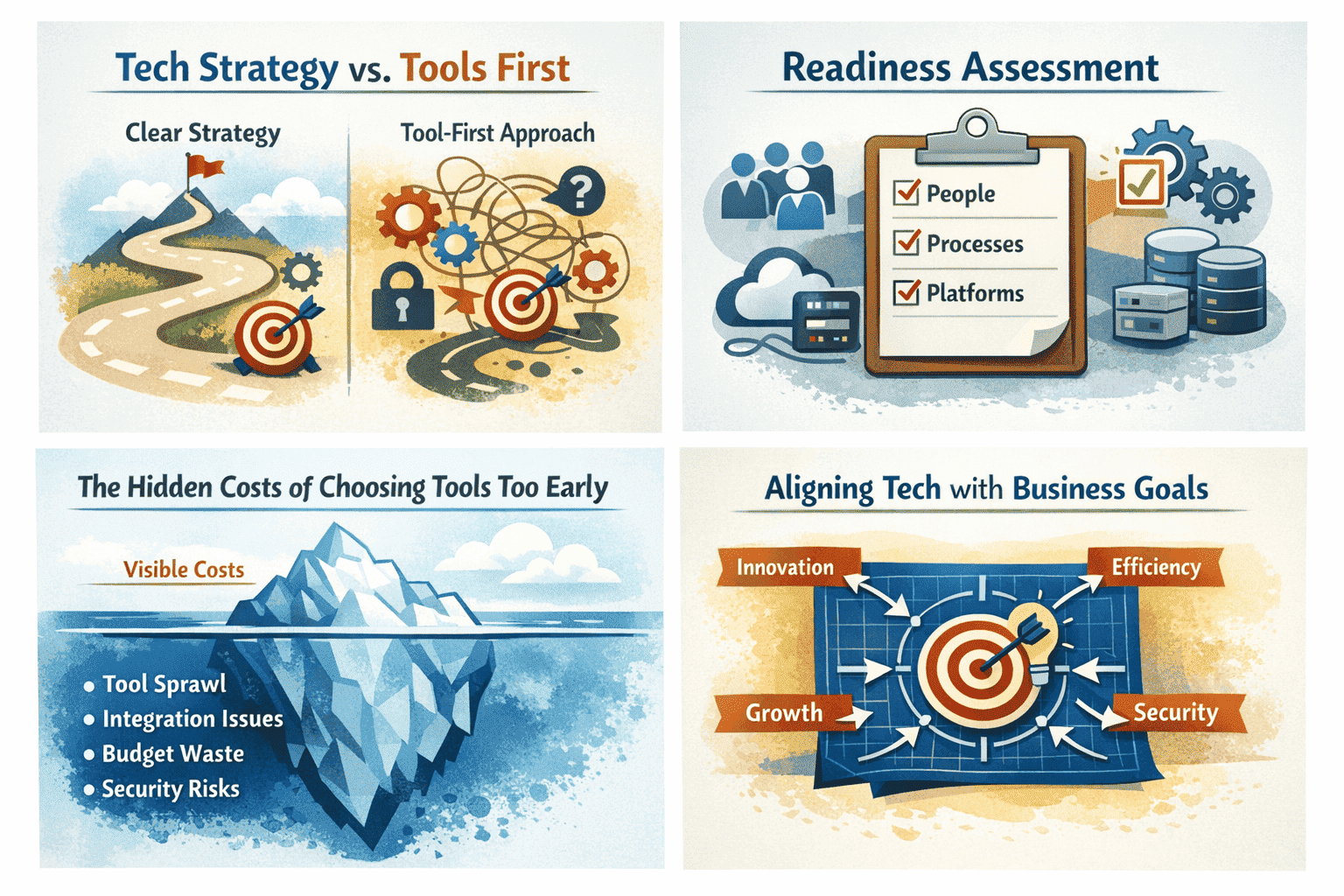
However, many organizations make a critical mistake early in their digital journey. Instead of defining a clear strategic direction, they begin by selecting technology tools. This tool first approach often leads to fragmented systems, overlapping capabilities, and technology investments that fail to deliver long term business value.
Establishing a strong tech strategy ensures that technology decisions remain aligned with business priorities and support sustainable digital transformation.
What a Tech Strategy Means for Enterprise Organizations
A tech strategy is a structured plan that defines how an organization uses technology capabilities to support business goals, operational priorities, and long term growth. A well defined technology strategy connects digital investments with measurable business outcomes and ensures that technology initiatives strengthen operational performance rather than introduce unnecessary complexity.
Without strategic direction, organizations often adopt technology reactively. Different teams may introduce tools independently, which leads to fragmented technology ecosystems and inconsistent governance standards.
A strong strategy also helps leadership teams understand whether their organization is ready to adopt and scale new technologies. Evaluating readiness before introducing major platforms is essential for avoiding operational risk and implementation delays. This readiness perspective is explored further in Technology Readiness Assessment for Scalable Digital Growth, where organizations assess their current capabilities across people, processes, and technology foundations.
Why Tool First Technology Decisions Often Fail
Selecting technology tools before defining strategic direction can introduce several structural risks that affect long term transformation success.
Organizations that adopt technology without a clear strategy often encounter fragmented technology environments, inconsistent governance standards, and limited adoption across teams. Over time these challenges increase operational complexity and reduce the value generated by technology investments.
When different departments independently adopt tools to solve similar problems, integration challenges quickly emerge and the overall technology ecosystem becomes difficult to manage. Without architectural direction and strategic governance, organizations may also struggle to scale new platforms effectively across business units.
These risks illustrate why technology decisions should follow strategy rather than lead it.
Principles of a Strategy First Technology Model
Organizations that define strategy before selecting tools approach technology investment in a more disciplined way. Instead of focusing on individual products, leadership teams begin by identifying the capabilities required to support long term business objectives.
A strategy first approach typically includes several key principles.
1. Align Technology Investments With Business Goals
Technology initiatives should directly support clearly defined business priorities. Strategic alignment ensures that digital investments contribute to measurable business outcomes rather than isolated operational improvements.
2. Establish Clear Technology Architecture Direction
A strong technology strategy defines architectural principles that guide platform selection, system integration, and long term technology evolution.
3. Strengthen Governance Over Technology Decisions
Governance structures ensure that technology investments follow consistent standards across departments and remain aligned with enterprise priorities.
4. Select Platforms That Support Future Growth
Organizations should evaluate whether new technologies can scale with future operational requirements instead of focusing only on short term implementation needs.
Once a clear strategy exists, organizations must also establish the operational structures required to support execution. The relationship between strategic direction and operational structure is explored in Designing a Scalable Technology Operating Model, where enterprises design operating models that enable consistent technology delivery.
Leadership Implications of a Strategy First Approach
For enterprise leadership teams, defining a technology strategy provides the foundation for coordinated digital transformation. When technology decisions follow strategic direction, organizations gain better visibility into digital investments and improve coordination across business units.
A strategy first approach also strengthens governance by ensuring that technology initiatives support long term organizational goals rather than reacting to short term operational demands.
By aligning strategy, governance, and architecture, organizations can reduce operational complexity and create digital environments that support sustainable innovation.
Warning Signs Your Technology Decisions Lack Strategic Alignment
Organizations that adopt tools before defining strategy often exhibit recognizable patterns as their technology environments grow more complex.
Common indicators include:
multiple teams adopting overlapping technology solutions
inconsistent technology governance across departments
low adoption rates for newly implemented tools
integration challenges between platforms
difficulty scaling digital initiatives across business units
Recognizing these signals early allows leadership teams to realign technology decisions with strategic priorities before complexity becomes difficult to manage.
👉 Read More
Why IT Strategy Execution Fails in Most Enterprises
Key Takeaways
A strong tech strategy provides the foundation for successful digital transformation. By defining strategic direction before selecting technology tools, organizations can align technology investments with business goals, reduce operational complexity, and build scalable digital ecosystems.
Organizations that adopt a strategy first approach also gain better visibility into their readiness for transformation and can implement technology initiatives with greater confidence and control.
Frequently Asked Questions
What is a tech strategy
A tech strategy defines how an organization uses technology capabilities to support business objectives, operational performance, and long term digital transformation initiatives.
Why should organizations define strategy before choosing technology tools
Defining a technology strategy before selecting tools helps organizations align technology investments with business priorities, reduce system fragmentation, and create scalable digital environments.
Start With Strategy, Not Tools
Before selecting platforms or tools, organizations need a clear technology strategy that aligns business priorities with technology investments. GSCatalyst helps enterprises define strategy, architecture direction, and transformation priorities that guide sustainable digital growth.