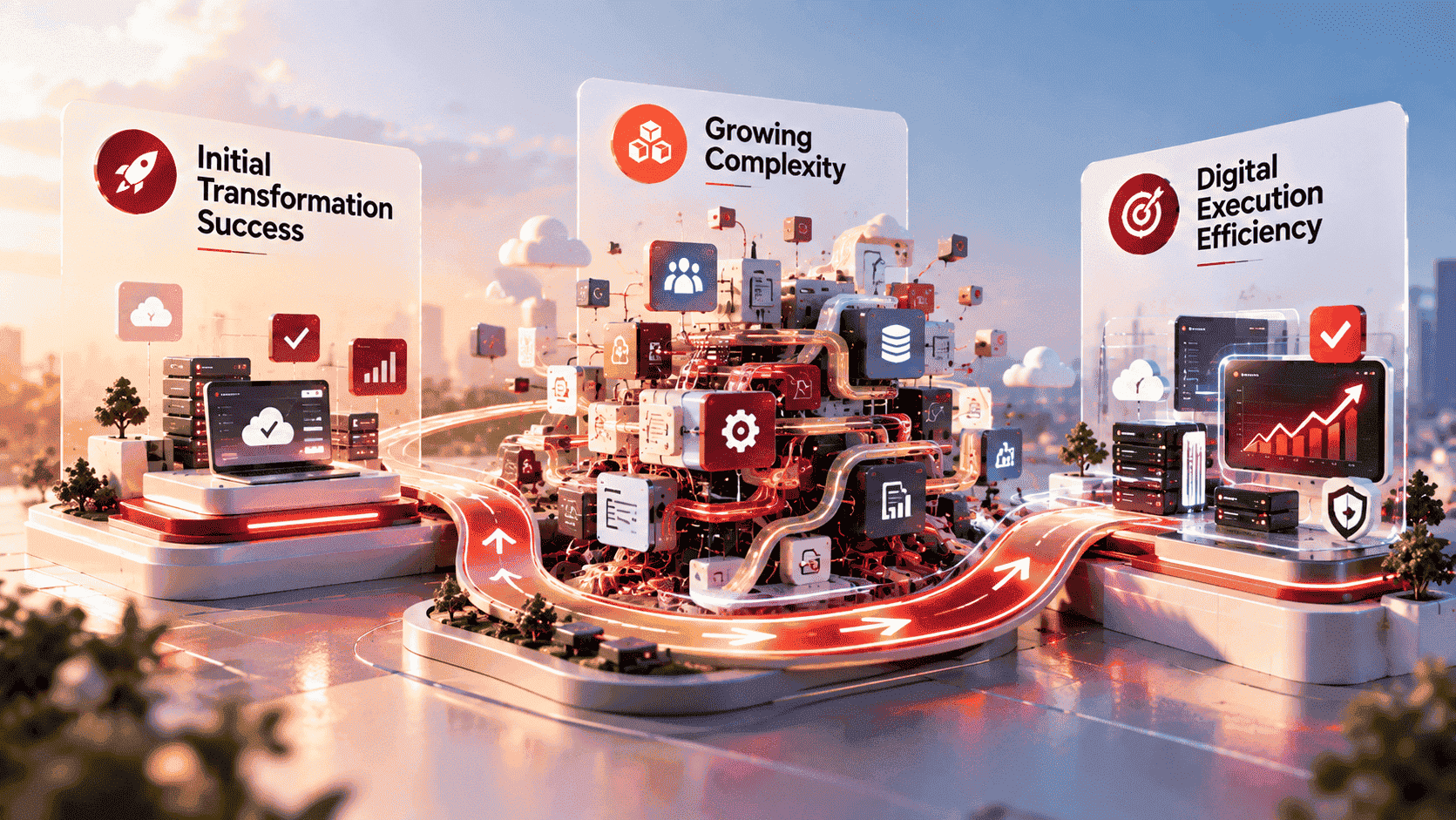











Technology portfolios rarely remain static. Organizations continuously introduce new digital initiatives, modernize existing platforms, expand cloud capabilities, and invest in emerging technologies. As these investments accumulate, leaders face increasingly difficult decisions about which initiatives should receive additional funding, which require improvement, and which no longer create meaningful business value.
Although executive teams have access to financial reports, operational dashboards, and project updates, these sources rarely provide a complete picture of technology performance. Individual metrics may appear positive, yet they often fail to explain whether technology investments are contributing to strategic business outcomes or creating measurable long-term value.
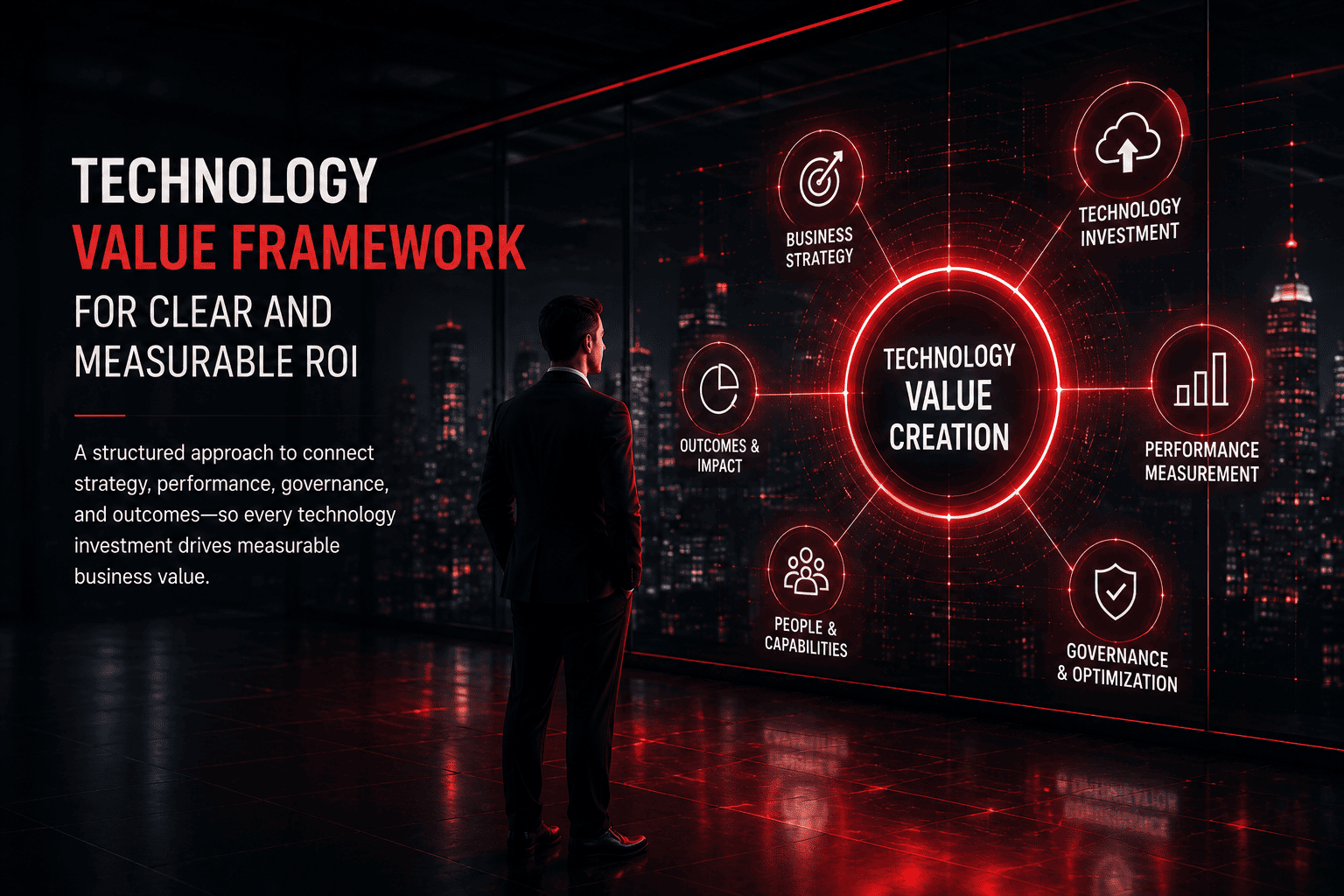
A technology value framework provides the governance needed to connect business objectives, operational performance, financial outcomes, and investment decisions into a consistent decision-making model. Rather than evaluating projects individually, organizations gain a portfolio-wide view of where technology creates value and where improvements are required.
Organizations that establish structured technology value management practices are better equipped to prioritize investments, strengthen governance, and maximize business value throughout the technology lifecycle.
What Is a Technology Value Framework
A technology value framework is a structured governance model that enables organizations to define, measure, evaluate, and continuously improve the value created by technology investments.
Rather than evaluating projects solely through implementation success or financial returns, a technology value framework integrates strategic objectives, operational performance, financial outcomes, customer impact, and organizational capabilities into a unified decision-making process.
A mature framework helps organizations answer important questions such as:
Which technology initiatives generate measurable business value?
How do expected benefits compare with actual outcomes?
Where should future technology investments be prioritized?
Which initiatives require improvement, redesign, or retirement?
Without a structured framework, organizations often struggle to compare investments consistently or prioritize future initiatives using objective evidence.
Why Technology Value Remains Difficult to Measure
Technology value rarely becomes invisible because organizations lack data. More often, value becomes fragmented across different business functions, reporting systems, and governance processes.
Organizations commonly encounter situations where:
Financial reporting is disconnected from operational performance
Business outcomes are reviewed separately from technology initiatives
Different teams define value using different success criteria
Reporting cycles produce inconsistent or conflicting insights
As a result, leaders receive multiple reports but still lack a complete understanding of which investments are delivering meaningful business outcomes.
The importance of connecting technology investments with measurable business outcomes is discussed in Measuring Technology ROI Beyond Cost Savings, which explains why financial returns alone rarely capture the full value of enterprise technology.
From Measuring Performance to Managing Technology Value
Collecting performance data is only the first step toward effective investment governance. Organizations create value when performance insights influence funding decisions, operational improvements, and portfolio priorities.
Many organizations invest heavily in reporting platforms, analytics tools, and executive dashboards. These capabilities improve visibility, but visibility alone does not improve decision making.
Organizations strengthen technology value management when they use performance information to:
Prioritize future technology investments
Identify underperforming initiatives early
Redesign projects that fail to achieve expected outcomes
Align improvement activities across business and technology teams
Without this transition from reporting to governance, performance measurement becomes an administrative activity rather than a strategic capability.
The relationship between performance measurement and business outcomes is explored further in AI Business Value: Turning Use Cases into Measurable Impact, which demonstrates how organizations convert technology insights into measurable business value.
Core Components of a Technology Value Framework
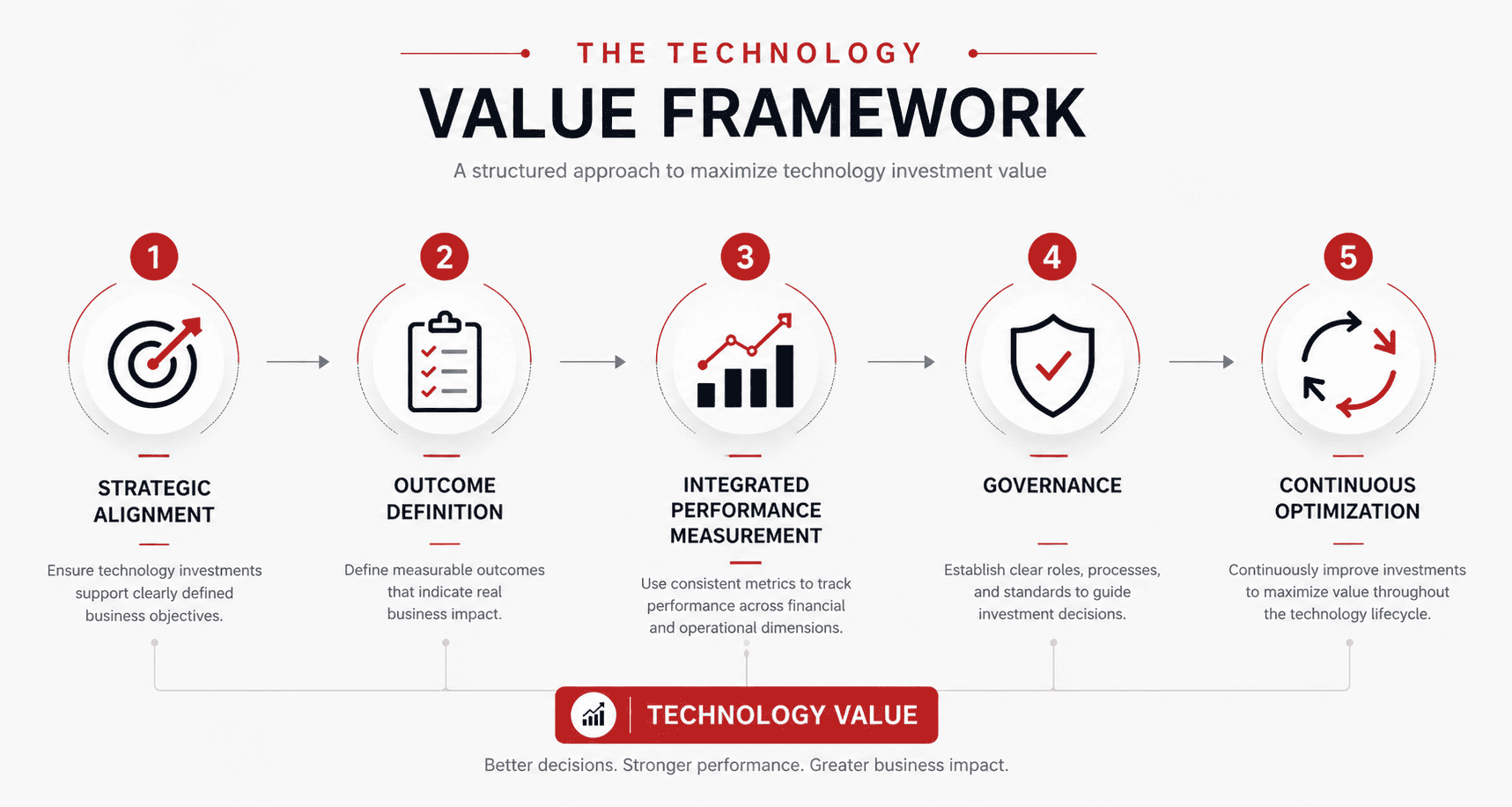
Organizations that consistently maximize technology value establish several governance capabilities that work together across the entire investment lifecycle.
1. Strategic Alignment
Every technology investment should contribute to clearly defined business objectives rather than operating as an isolated technology initiative. Strategic alignment ensures that funding decisions are driven by organizational priorities, allowing technology leaders to evaluate investments based on the business outcomes they are expected to enable.
Without clear alignment, technology portfolios often become collections of disconnected projects that individually appear successful but collectively deliver limited strategic value. Teams may optimize implementation, yet still struggle to explain how those initiatives support growth, operational efficiency, customer experience, or risk reduction.
Organizations should establish:
Measurable strategic objectives before investment approval
Alignment between technology initiatives and business outcomes
Executive sponsorship for expected value realization
Regular portfolio reviews to validate continued strategic relevance
Strategic alignment provides the foundation for every other component of the technology value framework. When priorities change, investment decisions should evolve with them.
2. Outcome Definition
Technology investments create value only when expected outcomes are defined clearly enough to be measured. Vague objectives such as "improve efficiency" or "support digital transformation" provide little guidance for evaluating whether an initiative has actually succeeded.
Effective organizations define expected outcomes before implementation begins and translate those expectations into measurable business indicators that can be reviewed throughout the investment lifecycle.
Organizations should establish:
Clearly documented success measures
Quantified benefit realization targets
Agreed definitions of value across stakeholders
Baseline performance metrics for future comparison
Well-defined outcomes strengthen accountability while making technology investments easier to evaluate objectively rather than through assumptions or anecdotal evidence.
3. Integrated Performance Measurement
Technology value cannot be understood through financial or technical metrics in isolation. A system may achieve excellent availability while failing to improve customer experience, or deliver operational efficiencies without generating measurable business impact.
A mature framework combines multiple perspectives to provide leaders with a balanced understanding of technology performance.
Organizations should integrate:
Financial performance and investment returns
Operational efficiency and service quality
Customer and employee experience indicators
Strategic business outcomes and organizational capability growth
By combining these dimensions, organizations gain a more complete understanding of how technology contributes to enterprise performance instead of optimizing isolated metrics.
4. Governance and Accountability
A technology value framework succeeds only when ownership and decision-making responsibilities are clearly defined. Measuring value alone is insufficient if no individual or leadership group is responsible for acting on the results.
Strong governance ensures that investment performance is reviewed consistently, underperforming initiatives receive timely attention, and strategic decisions are supported by reliable evidence rather than assumptions.
Organizations should establish:
Clearly assigned ownership for benefit realization
Structured portfolio review processes
Transparent investment decision responsibilities
Escalation mechanisms for underperforming initiatives
Regular executive governance meetings focused on value realization
Governance transforms technology value from a reporting exercise into a continuous management discipline that supports better investment decisions across the enterprise.
5. Continuous Optimization
Technology value is not created at implementation alone. Business priorities evolve, market conditions change, customer expectations shift, and technology capabilities mature over time. As a result, investments that once delivered significant value may require optimization, redesign, or retirement.
Organizations should continuously evaluate whether technology initiatives remain aligned with strategic objectives and continue producing measurable business outcomes.
Organizations should establish:
Ongoing portfolio performance reviews
Structured reprioritization of technology investments
Continuous improvement initiatives supported by measurable evidence
Periodic reassessment of expected business outcomes
Continuous optimization enables organizations to maximize long-term business value while ensuring technology portfolios remain relevant as organizational priorities continue to evolve.
Technology Value Framework vs IT Value Framework
The terms technology value framework and IT value framework are generally used interchangeably.
Both describe governance approaches that help organizations evaluate technology investments, measure business outcomes, and improve investment decisions across enterprise technology portfolios.
Regardless of terminology, successful frameworks consistently provide:
Standardized performance metrics
Shared accountability between business and IT leaders
Transparent reporting mechanisms
Disciplined governance processes
The effectiveness of a framework depends far more on organizational adoption than on the terminology used to describe it.
Common Challenges When Implementing a Technology Value Framework
Organizations frequently encounter similar obstacles while improving value governance.
Common challenges include:
Designing measurement models that become unnecessarily complex
Focusing on governance compliance instead of actionable insight
Assigning ownership exclusively to IT teams rather than shared business stakeholders
Creating governance processes that slow decision making instead of supporting it
Successful organizations balance governance discipline with practical decision-making processes that encourage continuous improvement.
Why Technology Value Frameworks Improve Investment Decisions
When technology value is measured consistently, investment decisions become more objective and evidence based.
Organizations gain greater confidence to:
Prioritize initiatives with the highest strategic value
Redirect funding toward higher-performing investments
Discontinue projects that no longer support business objectives
Strengthen innovation while maintaining financial discipline
Rather than relying on assumptions or isolated metrics, leaders can evaluate investment priorities using a consistent governance model that supports long-term organizational success.
Read More: Transformation Performance Management for Enterprise Digital Initiatives
Key Takeaways
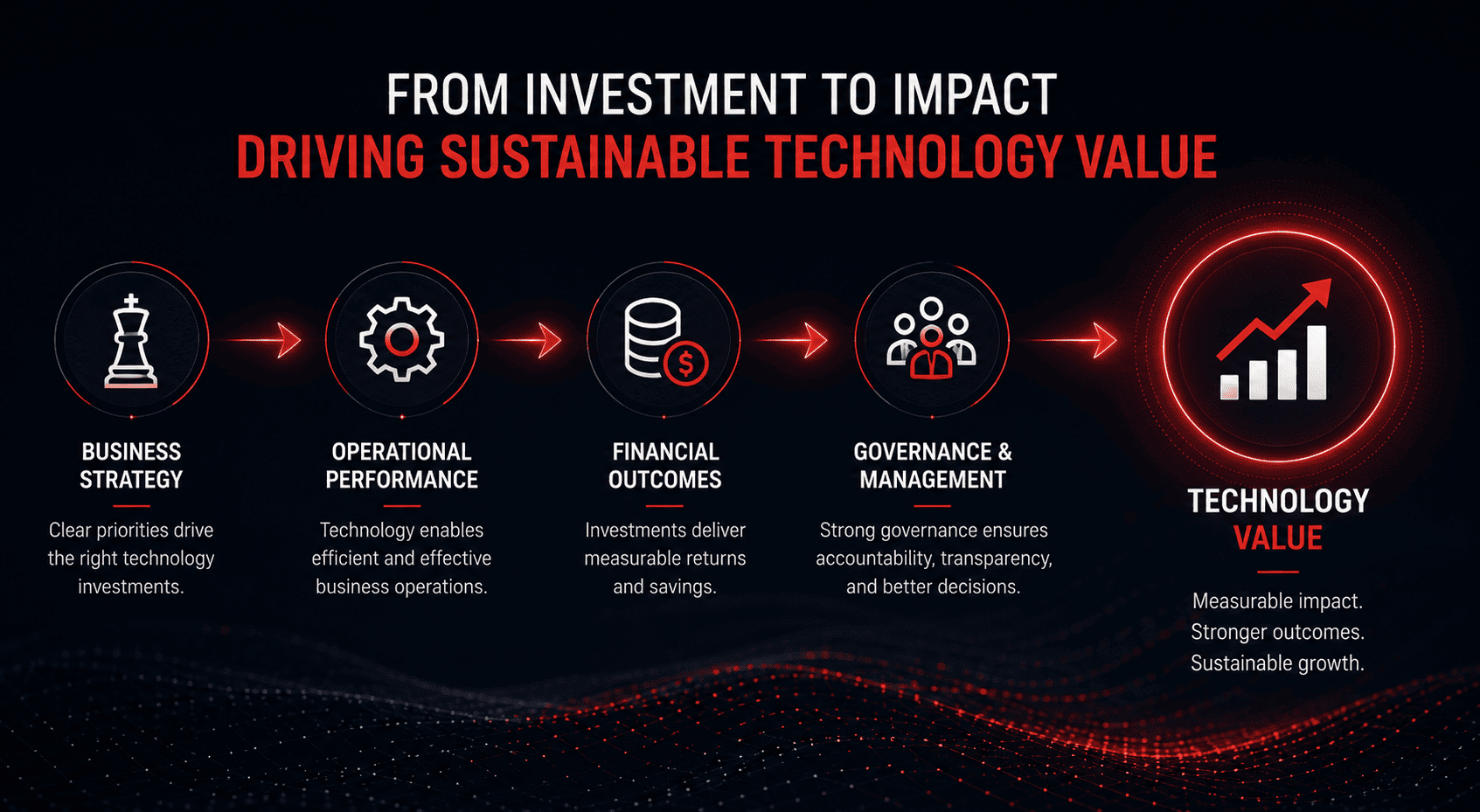
A technology value framework enables organizations to connect business strategy, operational performance, financial outcomes, and governance into a structured approach for evaluating technology investments.
By strengthening technology value management, organizations improve investment visibility, establish clearer accountability, and make more informed portfolio decisions across increasingly complex technology environments.
Organizations that continuously measure, govern, and optimize technology value are better positioned to maximize long-term business outcomes while supporting sustainable digital transformation.
Frequently Asked Questions
What is a technology value framework?
A technology value framework is a governance model that helps organizations define, measure, manage, and continuously improve the business value created by technology investments.
Is there a difference between a technology value framework and an IT value framework?
In most organizations, the two terms refer to the same governance approach for evaluating technology investments, measuring business outcomes, and supporting consistent investment decisions.
Why is a technology value framework important?
A technology value framework helps organizations connect technology investments with measurable business outcomes, improve governance, strengthen accountability, and make better portfolio investment decisions.
Build a Technology Value Framework That Supports Better Investment Decisions
Technology investments deliver greater business outcomes when value is measured consistently and governed effectively. GSCatalyst helps organizations design practical technology value frameworks, integrate financial and operational insights, and establish governance that supports better investment decisions across the enterprise.
Explore how GSCatalyst can help your organization build a technology value framework that turns technology investments into measurable business value.