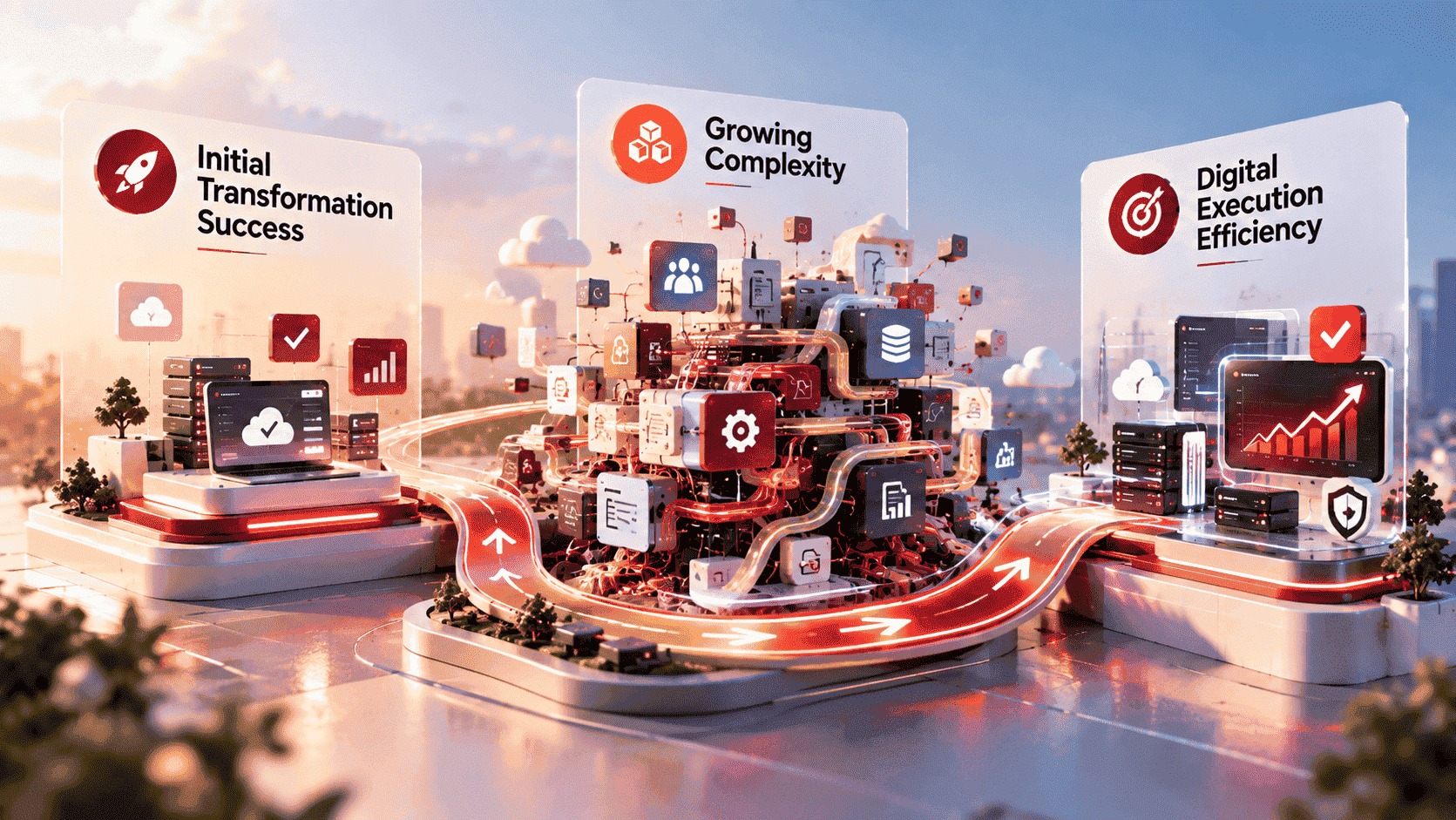












As digital transformation initiatives mature, organizations often encounter operational pressures that were less visible during early implementation. Systems may already be deployed and processes may be more standardized, but the demand placed on technical teams continues to expand as digital portfolios grow.
New initiatives compete with existing programs for the same specialists, while operational responsibilities continue alongside transformation work. Teams must maintain current platforms, resolve production issues, support business users, and deliver new capabilities without always having a clear view of their total commitments.
Without disciplined capacity planning, these competing demands can gradually affect delivery stability. Decisions take longer when critical specialists are unavailable, priorities shift as urgent requests emerge, and teams may struggle to meet commitments across several initiatives at once.
These patterns often indicate that enterprise IT resource management has not evolved at the same pace as the organization's transformation agenda. The challenge is not simply to add more people. It is to understand available capacity, make informed allocation decisions, and align delivery expectations with the resources required to achieve them.
What Is Enterprise IT Resource Management?
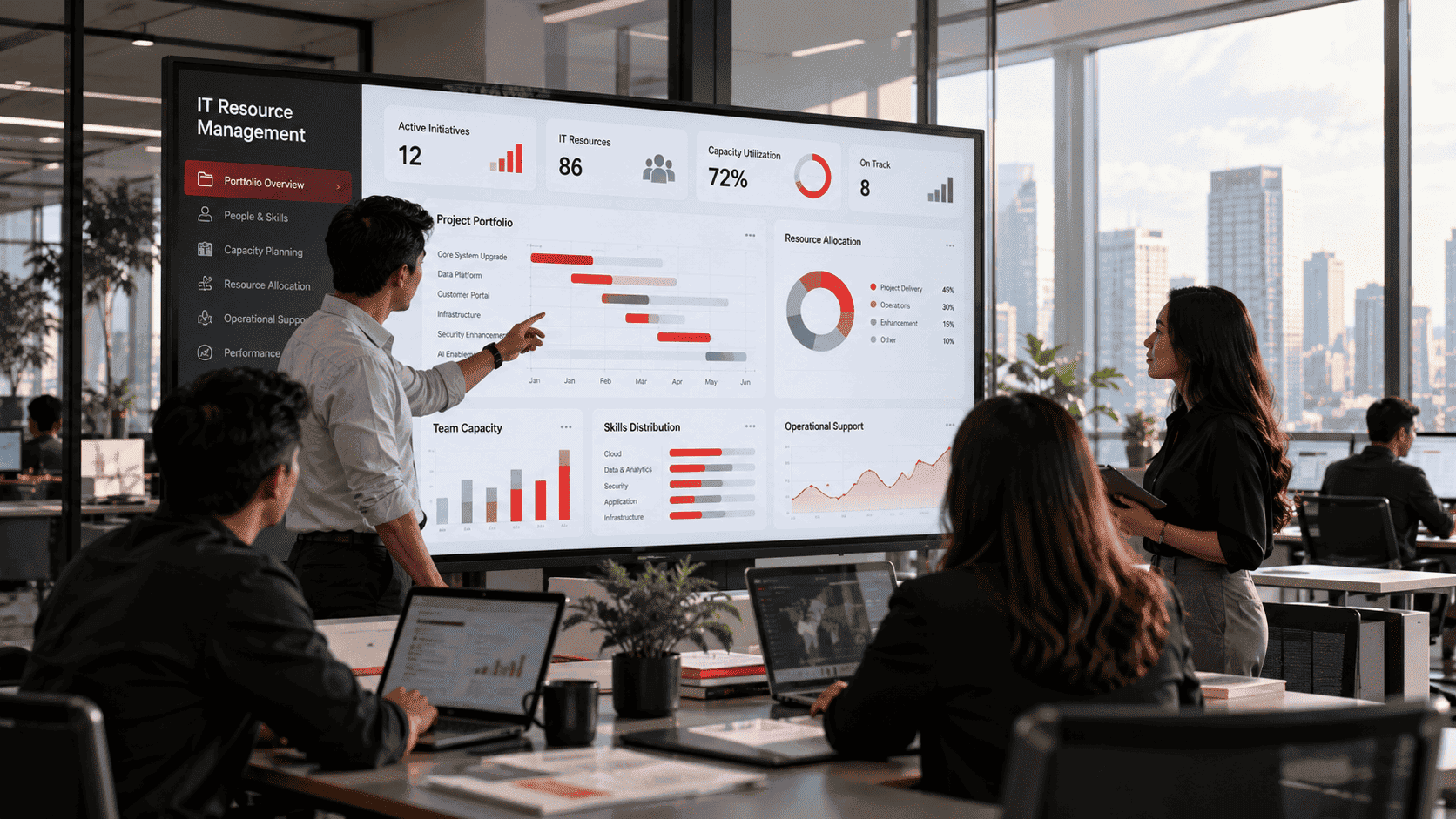
Enterprise IT resource management is the structured planning, allocation, and monitoring of IT personnel, technical skills, and delivery capacity across an organization's digital initiatives and operational responsibilities. It helps leadership align available expertise and capacity with business priorities while maintaining sustainable workloads and realistic delivery commitments.
Effective management considers not only the number of people available, but also their skills, existing responsibilities, expected demand, and availability over time.
This distinction matters because headcount alone does not reveal whether an organization can deliver its planned portfolio. A team may have enough people overall but still face a bottleneck when several initiatives require the same specialist or when operational support consumes capacity reserved for project delivery.
Enterprise IT resource management connects strategic priorities with practical delivery capability. It gives leaders a clearer basis for deciding which initiatives should proceed, where capacity constraints exist, and whether commitments need to be adjusted before delivery performance deteriorates.
Why Resource Governance Matters as Digital Portfolios Grow
As digital portfolios expand, resource decisions become more interconnected. A new initiative may depend on specialists already supporting existing systems, while an operational incident can redirect capacity away from planned delivery. Without a coordinated view, each team may make reasonable decisions locally while creating conflicts across the wider portfolio.
Reactive allocation can also encourage a cycle of repeated disruption. Teams are reassigned to address immediate issues, work already in progress loses continuity, and delivery plans must be revised to accommodate changing availability. Over time, the organization spends more effort resolving resource conflicts and less time completing planned work.
Structured resource governance helps leadership assess competing demands against strategic priorities, operational commitments, and available capacity. Rather than treating every request as equally urgent, organizations can evaluate the business value, dependencies, risk, and resource requirements of each initiative before committing delivery teams.
This approach also connects resource planning with process discipline. As discussed in Enterprise Process Optimization for Sustainable Delivery Performance, consistent governance and clearly defined workflows help organizations coordinate delivery as complexity increases. Resource management builds on that foundation by ensuring that approved priorities are supported by realistic capacity plans.
Structural Challenges in Enterprise IT Resource Management
Even when organizations recognize the importance of resource planning, several structural barriers can make capacity difficult to manage across a growing portfolio.
1. Limited Visibility Into Capacity Allocation
Resource information is often spread across project plans, team schedules, operational systems, and departmental reporting. Leadership may know which initiatives are underway without having a reliable view of how much capacity each one requires or which specialists are already committed elsewhere.
This makes it difficult to identify overload risks early, compare competing requests, or determine whether new work can be absorbed without disrupting existing commitments. A consolidated view of demand, availability, skills, and operational responsibilities provides a stronger basis for allocation decisions.
2. Overdependence on Specialized Talent
Some initiatives rely heavily on a small number of specialists who hold critical technical knowledge or experience with complex systems. When several projects require their involvement simultaneously, their availability becomes a constraint across the portfolio.
The problem can become more severe when knowledge is concentrated in individuals rather than shared through documentation, collaboration, and structured knowledge transfer. Resource planning should therefore consider both specialist availability and the organization's ability to distribute critical knowledge.
This issue also connects with From Hero Teams to Sustainable Operations, particularly the need to reduce reliance on a small group of specialists and build more sustainable ways of delivering and supporting technology initiatives.
3. Reactive Resource Reassignment
When capacity planning is informal, urgent requests can trigger frequent reassignment of people between initiatives. Although this may resolve an immediate problem, repeated changes can interrupt work, delay handoffs, and create uncertainty about delivery ownership.
A more disciplined approach establishes clear prioritization and escalation mechanisms. Resource changes should consider the impact on existing commitments rather than treating reassignment as an isolated decision.
4. Portfolio Growth Without Capacity Alignment
Organizations may approve new initiatives based on strategic value without fully accounting for the resources needed to deliver them alongside ongoing operational work. As the portfolio expands, the gap between planned demand and available capacity becomes harder to manage.
This can lead to unrealistic delivery commitments, growing backlogs, and persistent pressure on teams. Portfolio decisions should therefore consider capacity requirements before initiatives are approved or delivery dates are confirmed.
Building a Sustainable Enterprise IT Resource Management Model
Effective enterprise IT resource management requires more than maintaining a spreadsheet of assigned personnel. It needs a repeatable process for forecasting demand, evaluating capacity, resolving conflicts, and reviewing whether resource decisions continue to support organizational priorities.
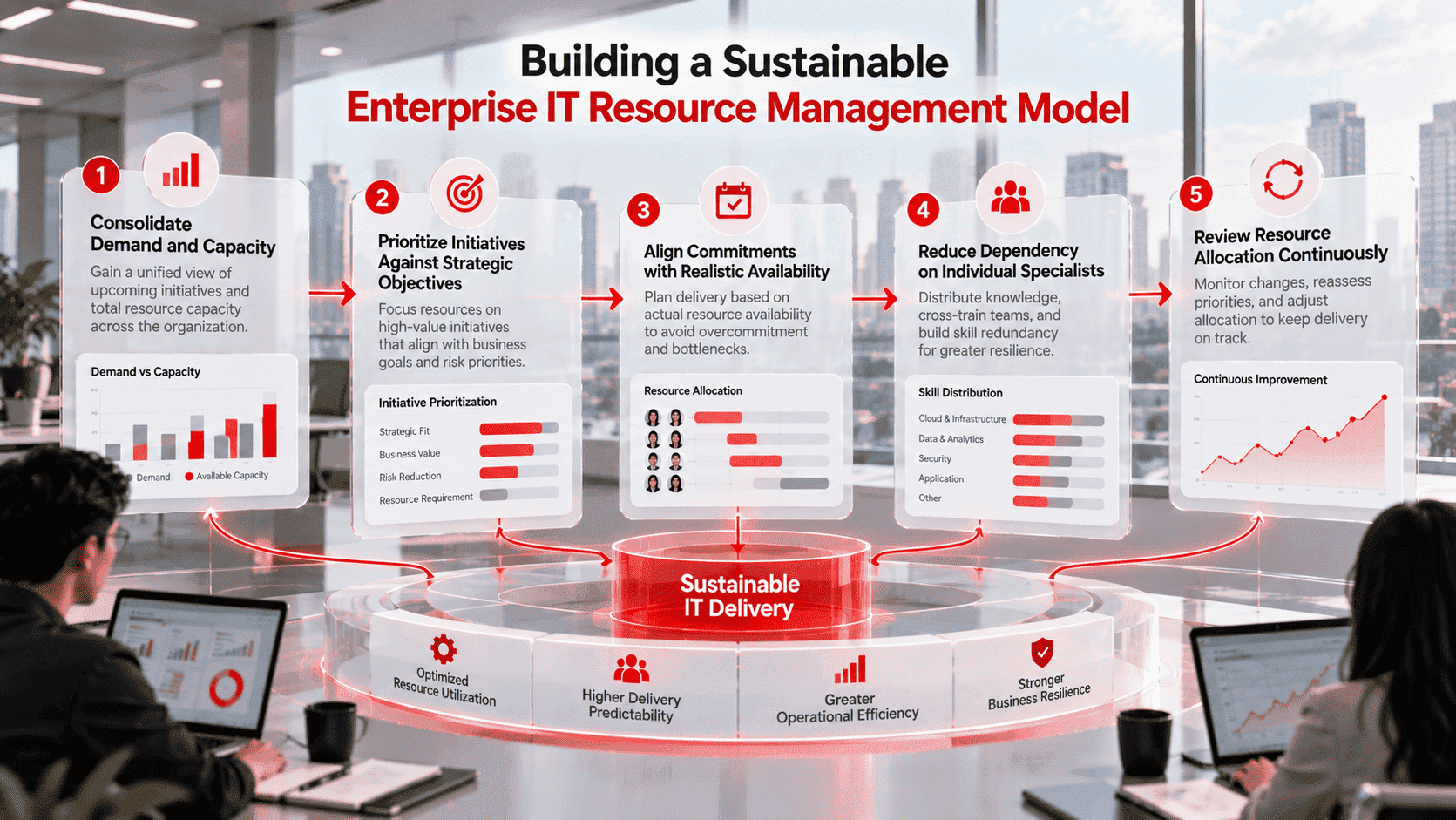
Five practices provide a practical foundation.
1. Establish a consolidated view of demand and capacity. Bring together information about active initiatives, operational responsibilities, specialist skills, planned commitments, and expected demand. The goal is to identify meaningful constraints across the portfolio, not to create unnecessary administrative work for every team.
2. Prioritize initiatives against strategic objectives. Evaluate competing requests using agreed criteria such as business value, urgency, risk, dependencies, and resource requirements. This gives leadership a consistent basis for deciding which initiatives receive capacity first and which may need to be deferred or adjusted.
3. Align commitments with realistic availability. Account for ongoing support, maintenance, leave, and other operational responsibilities when estimating delivery capacity. Plans should reflect the time people can realistically dedicate to initiatives rather than assuming all working hours are available for project delivery.
4. Reduce dependency on individual specialists. Identify roles where limited expertise creates recurring bottlenecks. Cross-training, knowledge documentation, succession planning, and structured collaboration can help distribute critical knowledge and reduce disruption when key individuals become unavailable.
5. Review resource allocation continuously. Compare planned demand with actual workload, delivery progress, and emerging operational needs. Regular portfolio reviews allow leadership to adjust priorities and resource assignments before constraints become persistent delivery problems.
These practices work best when resource decisions are connected to portfolio governance. A consolidated capacity view has limited value if leaders cannot resolve competing priorities or if teams continue accepting work without accounting for existing commitments.
Sustainable resource management also requires a balance between utilization and resilience. Keeping every specialist fully occupied may appear efficient, but it can leave the organization unable to respond to incidents, changing priorities, or unexpected dependencies. Appropriate capacity buffers should reflect the organization's operational risks and the variability of its workload.
Measuring Resource Efficiency and Delivery Sustainability
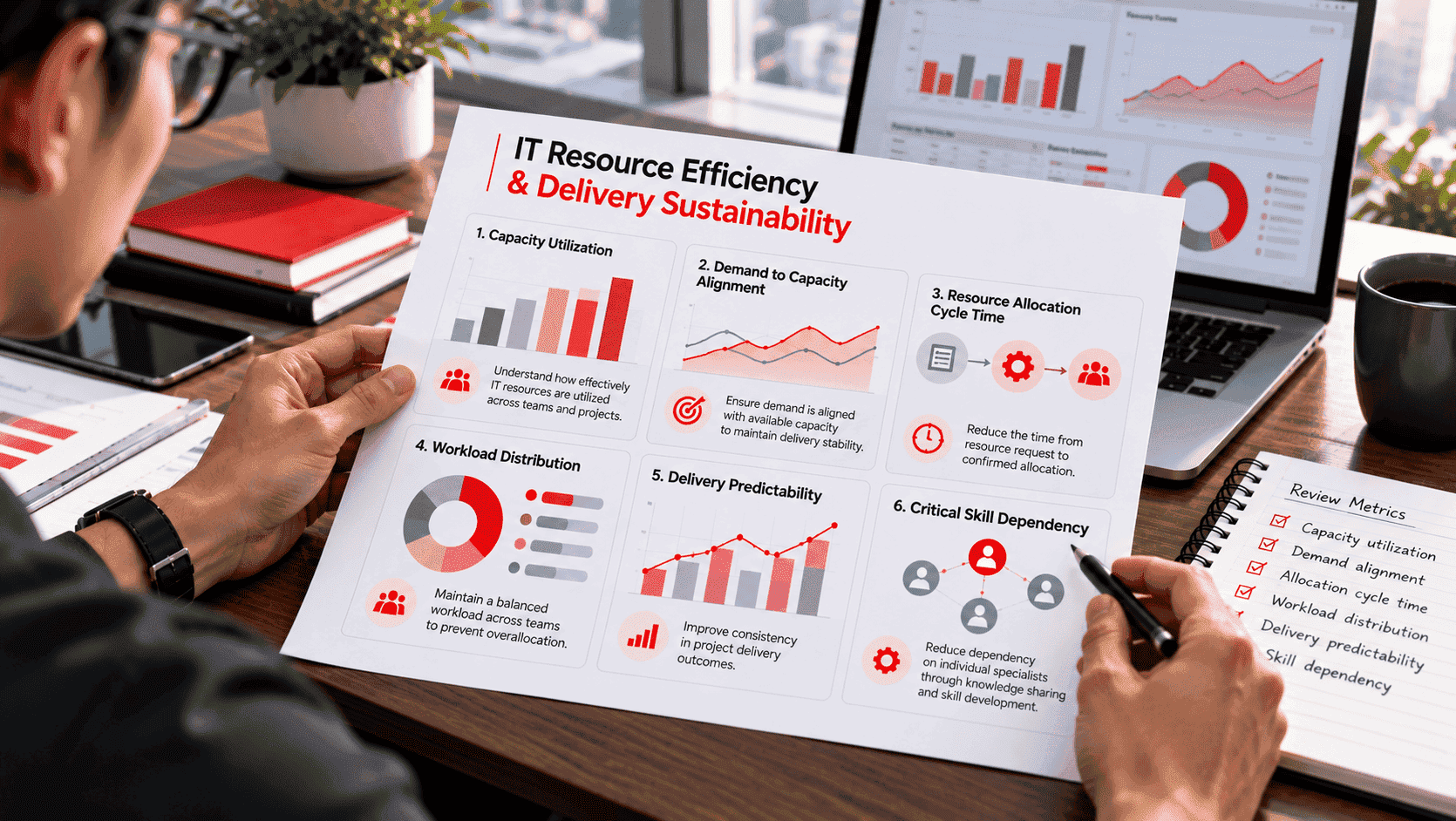
Resource management should be evaluated through indicators that reveal whether capacity is being allocated effectively and whether delivery commitments remain realistic. Headcount and utilization alone cannot show whether teams are working sustainably or whether the organization is delivering the right outcomes.
Useful indicators include:
Capacity utilization: The proportion of available working capacity committed to planned and operational work, interpreted alongside workload and delivery outcomes.
Demand-to-capacity alignment: The extent to which planned work can be supported by available skills and capacity over the relevant planning period.
Resource allocation cycle time: How long it takes to assess and resolve resource requests or competing allocation needs.
Workload distribution: Whether commitments are reasonably balanced across teams and whether specific individuals or functions face persistent overload.
Delivery predictability: Whether initiatives can maintain agreed timelines as resource assignments and priorities change.
Critical skill dependency: The extent to which delivery relies on a limited number of specialists or individuals with unique knowledge.
These indicators should be interpreted together. High utilization may coexist with missed deadlines if resources are assigned to too many competing priorities. Similarly, faster resource allocation does not necessarily indicate better management if assignments are made without considering skill fit or existing commitments.
Organizations should establish a baseline, monitor trends, and review the causes behind significant changes. The objective is to improve the relationship between resource allocation, workload sustainability, and delivery outcomes rather than maximize utilization as an isolated target.
Sustaining Operational Efficiency as Demand Evolves
Enterprise IT resource management is an ongoing discipline because demand, priorities, and available capacity change over time. New transformation initiatives, evolving technology requirements, operational incidents, and shifting business objectives can all affect how resources need to be allocated.
Organizations that manage these changes through clear prioritization, capacity visibility, and regular portfolio reviews are better positioned to identify constraints before they become systemic delivery problems. They can make informed trade-offs, protect critical operational responsibilities, and adjust commitments when available capacity no longer matches planned demand.
The objective is not to keep every resource fully utilized or prevent all changes to delivery plans. It is to ensure that resource decisions support business priorities without creating unsustainable workloads or unnecessary disruption.
When capacity planning becomes part of portfolio governance, enterprises can make more realistic commitments, reduce avoidable resource conflicts, and sustain delivery performance as digital portfolios become more complex.
Key Takeaways
Enterprise IT resource management aligns technical capacity, skills, and resource allocation with strategic priorities and operational commitments.
Limited capacity visibility, dependence on specialized talent, reactive reassignment, and portfolio growth can undermine delivery performance.
Sustainable resource management requires consolidated capacity planning, clear prioritization, realistic commitments, and continuous review.
Utilization should be evaluated alongside workload distribution, delivery predictability, and dependency on critical specialists.
Resource governance helps enterprises balance delivery demands with operational resilience and long-term efficiency.
Read More: Enterprise Delivery Stability Through Risk Governance
Frequently Asked Questions
What is enterprise IT resource management in digital transformation?
Enterprise IT resource management is the structured planning, allocation, and monitoring of IT personnel, technical skills, and delivery capacity across digital initiatives and operational responsibilities. It helps organizations align available expertise with business priorities while maintaining sustainable workloads and delivery commitments.
Why is IT resource management critical for transformation success?
IT resource management helps organizations ensure that approved initiatives have the capacity and expertise needed for delivery. It also helps identify resource conflicts, manage competing priorities, and reduce disruption caused by frequent reassignment or dependence on a limited number of specialists.
How can enterprises improve IT resource allocation?
Enterprises can improve resource allocation by consolidating capacity information, prioritizing initiatives using consistent criteria, accounting for operational responsibilities, identifying critical skill dependencies, and reviewing demand against available capacity regularly.
How do organizations measure IT resource management effectiveness?
Organizations can monitor capacity utilization, demand-to-capacity alignment, resource allocation cycle time, workload distribution, delivery predictability, and dependence on critical specialists. Evaluating these indicators together provides a more complete view of resource efficiency and delivery sustainability.
Ready to Strengthen Enterprise IT Resource Management?
If your organization is experiencing resource strain or uneven workload distribution across transformation initiatives, GSCatalyst helps enterprises strengthen capacity governance, improve resource planning, and align delivery commitments with operational priorities to support long-term efficiency.