











The Hidden Risk Behind Rapid Technology Adoption
Digital transformation initiatives continue to accelerate across industries as organizations pursue efficiency, innovation, and competitive advantage. Cloud platforms, analytics tools, automation technologies, and cybersecurity solutions promise measurable improvements in operational performance. As these opportunities expand, many organizations assume they are ready to adopt new technologies immediately.
However, technology adoption often fails not because the tools are ineffective, but because organizations are not fully prepared to implement and scale them. Leadership teams may introduce new platforms without evaluating whether their people, processes, governance structures, and operating models are capable of supporting these technologies effectively.
A structured technology readiness assessment helps organizations understand their current capabilities, identify operational gaps, and determine whether their foundations are strong enough to support digital transformation at scale. Without this clarity, businesses risk introducing complexity, delaying outcomes, and increasing operational risk.

The Real Meaning of Technology Readiness in Digital Transformation
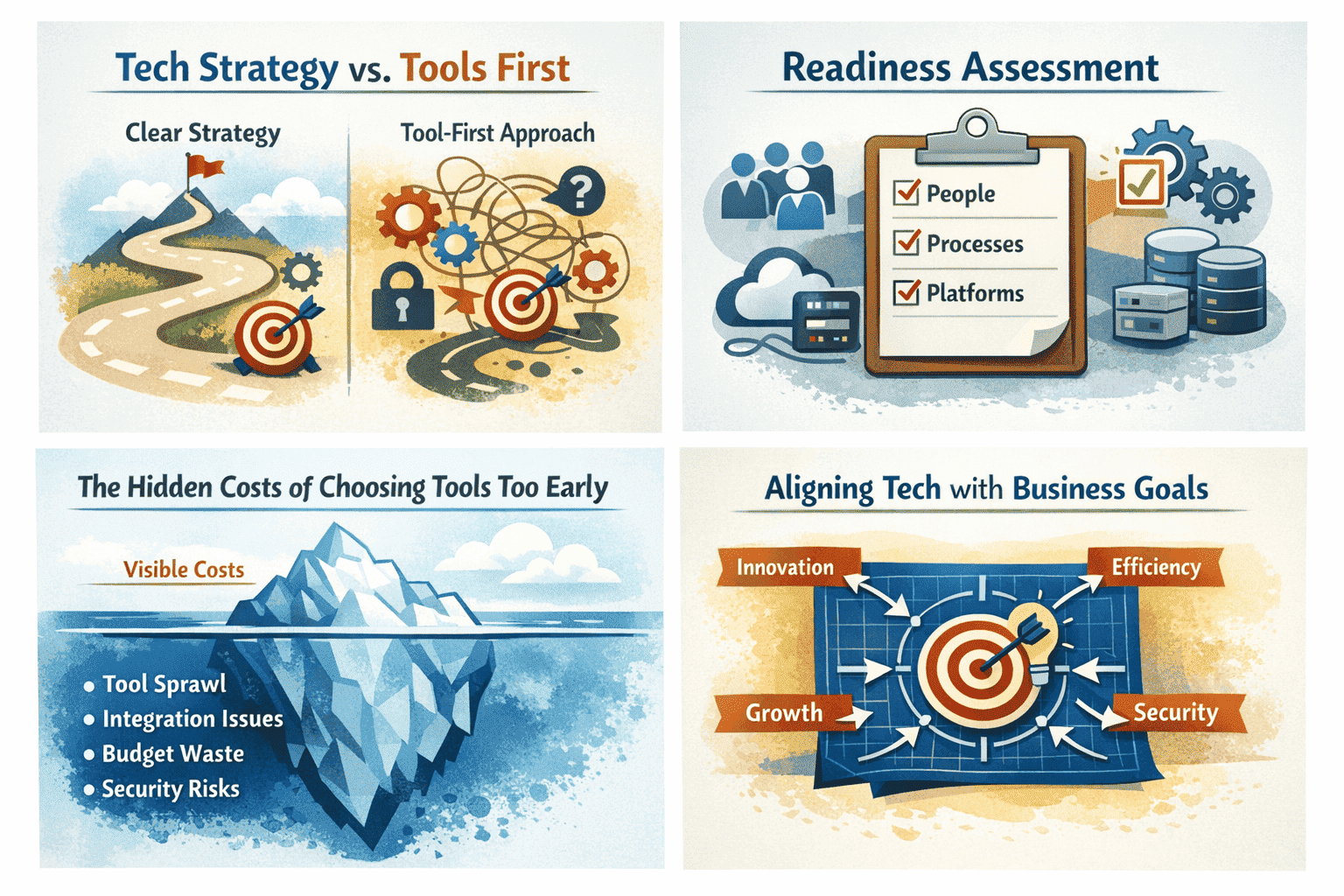
Technology readiness refers to an organization’s ability to adopt, operate, and scale technology effectively across people, processes, governance structures, and existing platforms. Rather than focusing only on infrastructure maturity, technology readiness evaluates whether the organization possesses the operational foundation required to support sustainable digital transformation.
Organizations with strong technology readiness typically experience smoother implementation cycles, stronger technology adoption across teams, and improved returns on technology investments. When readiness is clearly understood, leadership teams can introduce new digital capabilities with greater confidence and predictability.
Technology readiness also depends heavily on strategic clarity. Organizations that define their technology direction before selecting platforms are better positioned to evaluate readiness gaps and prioritize improvements. This relationship between strategy and readiness is explored in Why Tech Strategy Matters Before Choosing Tools, where organizations establish the strategic foundation required for successful technology adoption.
Why Many Organizations Are Not Ready for Digital Transformation
Organizations that skip readiness assessments frequently encounter operational challenges once new technologies are introduced. These challenges often appear gradually as transformation initiatives expand across teams and departments.
Several structural gaps typically reveal that an organization is not fully prepared for digital transformation.
Common indicators include:
misalignment between business goals and technology initiatives
teams lacking the skills required to manage modern platforms
inefficient or undocumented operational processes
governance, security, and compliance gaps as digital environments scale
When these capability gaps remain unaddressed, technology adoption becomes increasingly difficult to manage. Digital initiatives may still move forward, but implementation timelines extend, operational complexity grows, and the value of technology investments becomes harder to realize.
The Five Dimensions of Technology Readiness Assessment
To evaluate readiness effectively, organizations should examine several capability areas that influence the success of digital transformation initiatives.
1. Strategy and Business Alignment
Technology readiness begins with leadership alignment. Organizations must ensure that technology initiatives clearly support business objectives and long term strategic priorities.
Leadership teams should evaluate whether business goals are clearly communicated, whether a technology strategy supports those goals, and whether stakeholders agree on digital priorities across the organization.
2. Workforce Capability and Skills
Successful technology adoption depends heavily on the capabilities of the workforce. Organizations must assess whether their teams possess the skills required to manage current and future technologies.
Capability assessments should examine technical expertise, training programs, and role clarity across teams. Without sufficient workforce readiness, even well designed technology initiatives struggle to achieve meaningful impact.
3. Process and Operating Model
Structured operational processes enable technology to scale effectively. Organizations should review how workflows operate across departments, whether processes are standardized, and where automation opportunities exist.
Fragmented or undocumented processes often limit the value organizations can extract from new digital platforms.
4. Technology Architecture and Integration
Existing technology environments must support scalability, integration, and operational resilience. Organizations should evaluate system reliability, platform interoperability, and architectural simplicity.
As digital environments expand, architectural governance becomes increasingly important. The relationship between architecture governance and secure cloud environments is explored further in Cloud Security Strategy: Aligning Cloud, Security, and Data for Sustainable Growth, which examines how organizations strengthen security and governance as technology adoption increases.
5. Governance, Security, and Risk Management
Governance frameworks ensure that digital growth remains controlled and sustainable. Organizations should evaluate whether security policies are clearly defined, whether technology decision ownership is established, and whether cost management policies exist.
Strong governance allows organizations to scale digital initiatives without introducing additional operational or regulatory risk.
Why Technology Readiness Shapes Transformation Success
For enterprise leadership teams, technology readiness represents more than an operational assessment. It serves as a strategic checkpoint that determines whether digital transformation initiatives can scale successfully.
When readiness gaps remain unidentified, organizations often encounter implementation delays, escalating costs, and operational instability as digital initiatives expand. Leadership teams may then be forced to address foundational capability gaps while transformation programs are already underway.
By conducting structured readiness assessments before introducing new technologies, organizations can strengthen their operational foundations and ensure that digital initiatives remain aligned with strategic priorities.
Early Indicators That Technology Readiness Is Low
Organizations can often detect readiness gaps before transformation initiatives encounter major disruption. Several operational signals frequently appear when readiness levels are insufficient.
Common early indicators include:
inconsistent adoption across teams after technology rollout
recurring delays in implementation timelines
integration challenges between existing platforms
increasing governance and security concerns
growing operational complexity across technology environments
Recognizing these signals early allows leadership teams to address readiness gaps before they evolve into larger operational constraints.
👉 Read More
From Planning to Performance: A Practical IT Execution Framework for Enterprises
Key Takeaways
Technology readiness is a foundational requirement for successful digital transformation. By evaluating readiness across strategy, workforce capability, operational processes, technology architecture, and governance structures, organizations gain clarity about their ability to adopt and scale new technologies.
Organizations that assess readiness early are better positioned to implement digital initiatives efficiently, align technology investments with business priorities, and reduce operational risks associated with large scale transformation programs.
Frequently Asked Questions
What is a technology readiness assessment
A technology readiness assessment evaluates whether an organization has the capabilities required to successfully adopt and scale technology initiatives across strategy, people, processes, and platforms.
Why is technology readiness important before adopting new technologies
Technology readiness helps organizations identify capability gaps before implementing new platforms, reducing implementation risk and improving long term technology adoption outcomes.
Start with Technology Readiness, Not Assumptions
At GSCatalyst, we help organizations conduct structured technology readiness assessments across strategy, people, processes, and platforms—providing clear insights before major investments are made.
👉 Looking to assess your organization’s technology readiness before your next initiative?
Explore how GSCatalyst supports businesses with strategy-led readiness assessments and consulting.