











Technology Planning Challenges in Modern Enterprises
Technology planning has become increasingly complex for modern enterprises. Cloud expansion, cybersecurity modernization, data platforms, automation initiatives, and artificial intelligence capabilities often compete for priority while budgets and execution capacity remain limited.
Without a clear technology roadmap, organizations often struggle to coordinate initiatives across multiple teams. Projects may start independently, dependencies may be overlooked, and technology investments can become fragmented across the organization. Over time, this lack of coordination weakens strategic alignment and reduces the value generated by digital transformation initiatives.
A structured roadmap helps organizations translate strategic objectives into coordinated execution. By defining priorities, sequencing initiatives, and aligning investments with business goals, organizations can move from reactive technology decisions toward structured technology planning.

The Strategic Role of a Technology Roadmap
A technology roadmap is a strategic planning framework that outlines how technology initiatives will be implemented over time to support business priorities and long term digital transformation goals.
Rather than focusing only on individual tools, a roadmap helps organizations align initiatives with broader capabilities and long term outcomes. This approach allows leadership teams to evaluate technology investments more effectively and build a sustainable digital transformation roadmap.
Effective roadmaps typically help organizations:
align technology initiatives with strategic business objectives
identify dependencies between major initiatives
balance innovation programs with operational stability
provide leadership teams with visibility into technology investments
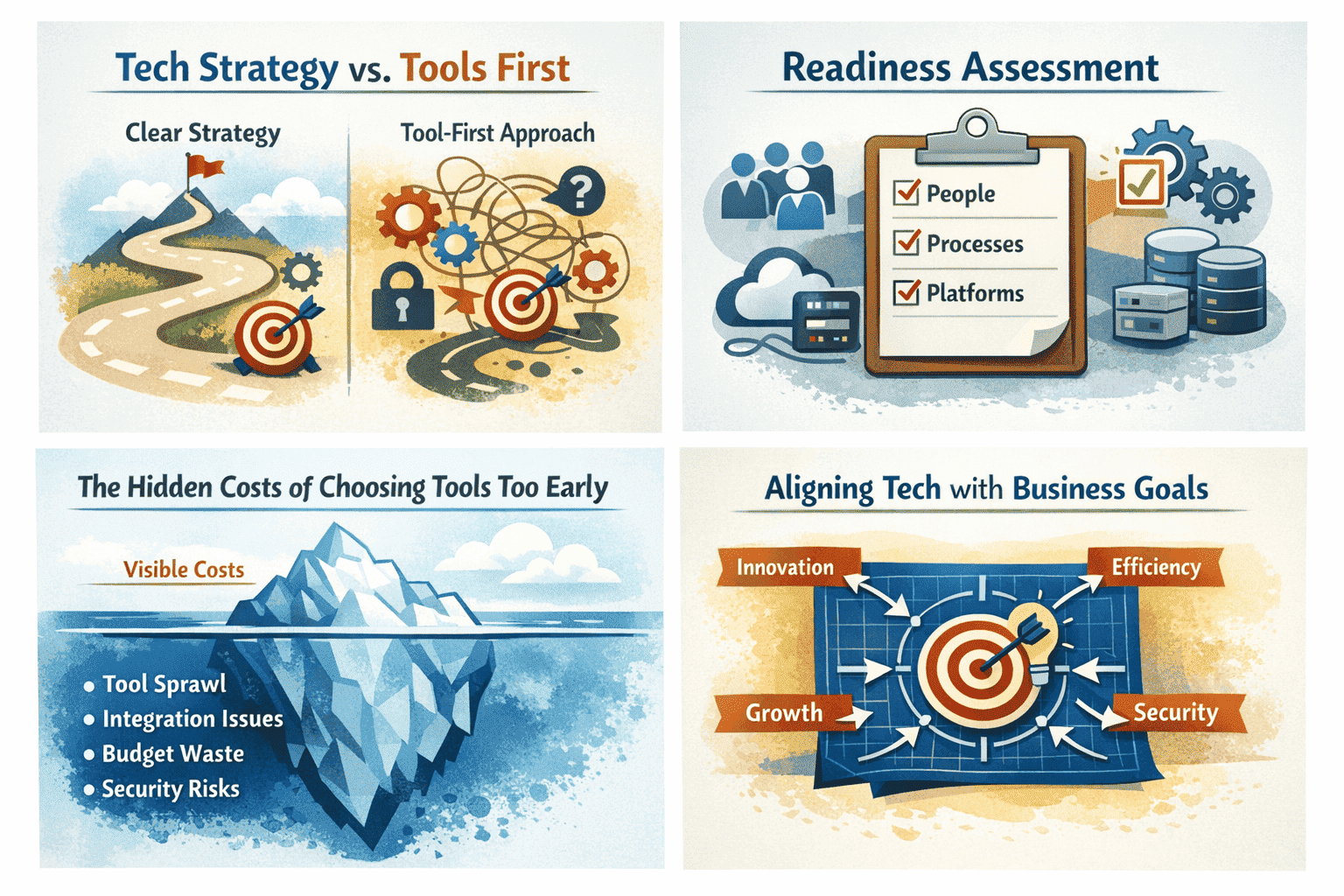
Roadmaps are most effective when they are built on a realistic understanding of organizational capabilities. This foundation is explored in Technology Readiness Assessment for Scalable Digital Growth, where organizations evaluate readiness across people, processes, and platforms before launching large transformation initiatives.
Why Organizations Struggle With Roadmap Clarity
Many organizations attempt IT roadmap planning without a clear strategic framework. As digital initiatives expand across departments, projects may be launched independently without coordination across the enterprise.
Common challenges include:
competing initiatives with unclear priorities
overlapping technology investments across teams
hidden dependencies that delay implementation timelines
difficulty explaining technology spending to executive leadership
When roadmap planning is missing, technology initiatives tend to focus on short term operational needs rather than long term strategic outcomes. Over time this reactive planning approach can create operational complexity and slow digital transformation progress.
Building a Practical Technology Roadmap Framework
Organizations that successfully develop a technology roadmap typically follow several core planning principles.
1. Start With Business Objectives
Every roadmap should begin with a clear understanding of business goals. Technology initiatives should support measurable outcomes such as revenue growth, operational efficiency improvements, risk reduction, or enhanced customer experience.
2. Focus on Capabilities Rather Than Tools
Instead of planning around individual technologies, mature organizations focus on capabilities. Examples include improving data driven decision making, strengthening cybersecurity posture, expanding automation, or modernizing digital customer engagement.
3. Sequence Initiatives Based on Dependencies
Effective technology roadmap planning recognizes that not all initiatives can be implemented simultaneously. Sequencing initiatives based on dependencies helps organizations maintain execution momentum without overwhelming teams.
4. Establish Governance and Decision Ownership
Successful roadmaps define clear ownership and governance structures. Decision makers must be identified so that initiatives remain aligned with enterprise priorities and resource constraints.
How Roadmaps Improve Enterprise Technology Decision Making
A well designed roadmap improves how organizations evaluate technology investments and prioritize digital initiatives.
Leadership teams gain a structured view of upcoming initiatives, expected outcomes, and required capabilities. This visibility enables more disciplined decision making and helps organizations align technology investments with strategic objectives.
Roadmap driven planning also strengthens coordination between business units and IT teams, ensuring that technology initiatives contribute to broader transformation goals.
The ability to measure the value generated by technology initiatives is closely connected to structured planning. This relationship is explored in Measuring Technology ROI Beyond Cost Savings, where organizations examine how technology investments contribute to measurable business performance.
Signals That Technology Initiatives Lack Direction
Organizations without a structured roadmap often experience early signs that technology planning is becoming fragmented.
Common indicators include:
initiatives launched without clear sequencing or coordination
overlapping technology investments across departments
frequent reprioritization of digital initiatives
limited visibility into long term technology priorities
difficulty coordinating cross functional transformation programs
Recognizing these signals early allows organizations to introduce structured technology roadmap planning before operational complexity increases.
Strong execution discipline is also essential once roadmap initiatives begin implementation. This topic is explored further in How High Performing Organizations Achieve IT Execution Success, which explains how organizations maintain consistent delivery performance across complex transformation programs.
👉 Read More
How High Performing Organizations Achieve IT Execution Success
Key Takeaways
A technology roadmap helps organizations translate strategic direction into coordinated execution. By aligning technology initiatives with business priorities, sequencing investments, and clarifying governance structures, roadmaps enable enterprises to manage digital transformation more effectively.
Organizations that combine strategy, readiness assessment, and roadmap planning are better positioned to scale digital initiatives while maintaining operational stability.
Frequently Asked Questions
What is a technology roadmap
A technology roadmap is a strategic planning framework that outlines how technology initiatives will be implemented over time in order to support business objectives and digital transformation goals.
Why is a technology roadmap important
A technology roadmap helps organizations coordinate technology investments, manage dependencies between initiatives, and align digital transformation efforts with long term business strategy.
Turn Strategy Into a Practical Technology Roadmap
Building a structured roadmap helps organizations move from strategic planning to coordinated execution. GSCatalyst works with enterprise leaders to design scalable technology roadmaps that align technology investments, governance structures, and transformation initiatives.