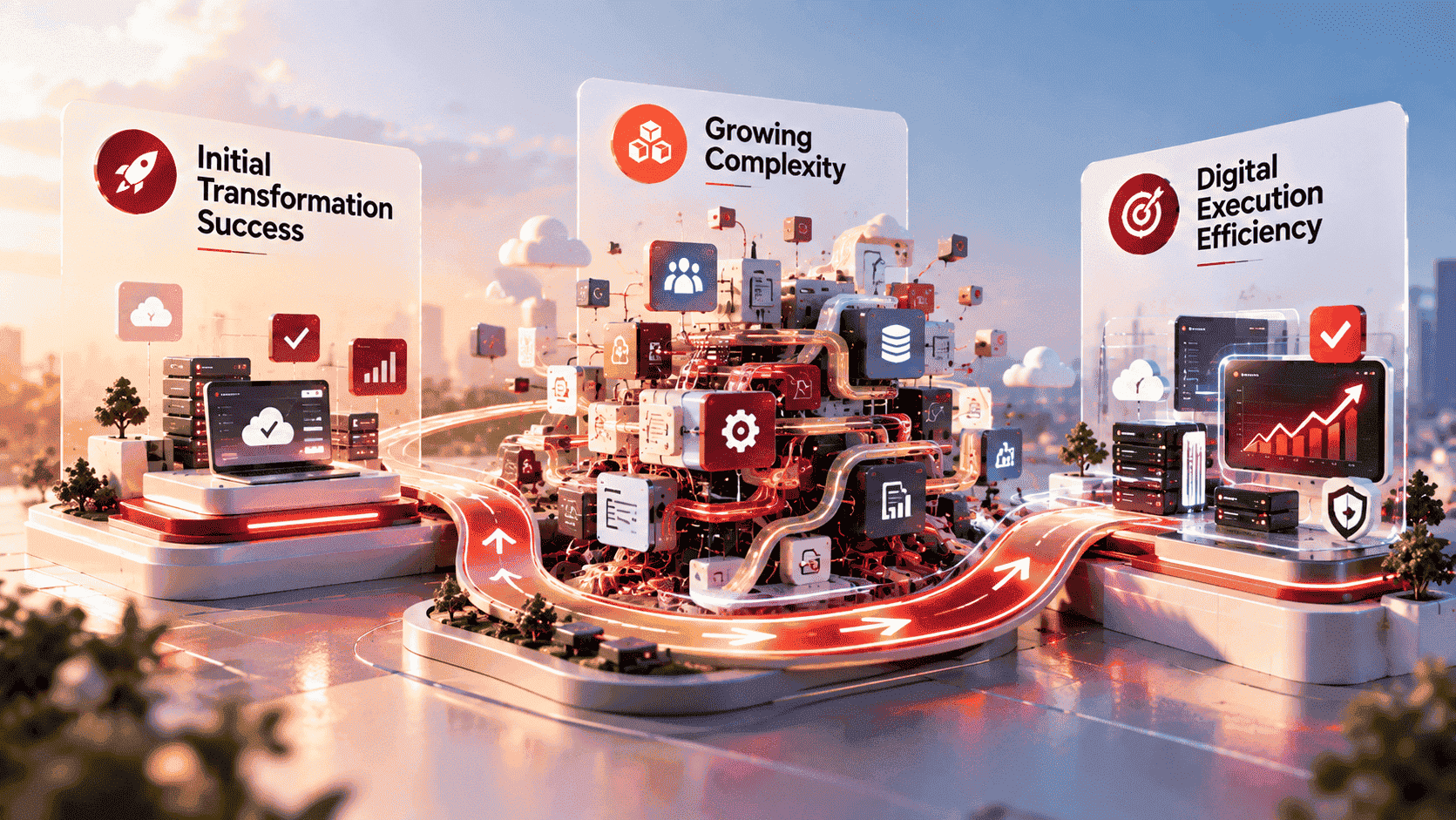












Many organizations invest heavily in digital platforms, enterprise systems, cloud environments, automation, and data capabilities. These technologies may function reliably, achieve strong user adoption, and remain operational after go live. Yet business leaders increasingly ask a more important question: are these investments actually delivering measurable business outcomes?
Technical stability is essential, but stable systems do not automatically create value. Technology can remain available, users can remain active, and operational incidents can stay under control while the organization still struggles to demonstrate improvements in revenue, productivity, cost efficiency, customer experience, or risk reduction.
This is why understanding the business value of technology has become increasingly important. Organizations need to evaluate not only whether technology works but also whether it contributes meaningfully to strategic and operational priorities.
A structured approach to IT business value helps organizations connect technology investments with measurable outcomes, improve decision making, and ensure that digital initiatives continue creating value after implementation.

What Is the Business Value of Technology
The business value of technology refers to the measurable contribution that technology investments make to business performance, operational outcomes, strategic priorities, and long term organizational capabilities.
This value may appear through increased revenue, improved productivity, lower operating costs, stronger customer experiences, reduced business risk, or greater organizational agility.
Unlike technical performance metrics, business value focuses on the outcomes enabled by technology rather than the activity generated by technology teams.
For example, system uptime may demonstrate operational reliability, but business value is created when that reliability improves customer service, protects revenue, reduces disruption, or enables employees to work more effectively.
A mature approach to managing technology value therefore connects technology performance with measurable business outcomes rather than evaluating systems only through technical indicators.
Why Technology That Works Does Not Always Deliver Business Value
Operational stability provides an essential foundation for digital performance, but stability alone does not guarantee that technology delivers meaningful impact.
Many organizations assume that once systems are implemented successfully and users begin adopting them, business value will emerge naturally. In practice, value depends on whether technology capabilities are intentionally connected to business objectives and continuously measured after implementation.
Organizations frequently encounter disconnects such as:
Technology metrics focused on uptime rather than business outcomes
Limited ownership for value realization after implementation
Weak alignment between technology initiatives and strategic priorities
Benefits defined vaguely or evaluated retrospectively
These gaps make it difficult to determine whether technology investments are improving business performance or simply maintaining operational activity.
The challenges associated with evaluating technology performance are explored in Measuring Technology Performance and Avoiding Common Mistakes, which explains how organizations can improve visibility into the outcomes generated by technology initiatives.
Core Dimensions of Technology Business Value
Organizations that successfully measure the business value of technology typically evaluate outcomes across several interconnected dimensions.
1. Revenue Enablement
Technology can create business value by enabling new revenue opportunities and improving how organizations reach customers and markets.
Examples include:
Launching new digital products and services
Expanding customer channels and market access
Improving sales and commercial decision making
Supporting new pricing or service models
Revenue enablement demonstrates how technology contributes directly to business growth rather than functioning only as operational infrastructure.
2. Productivity and Operational Performance
Technology investments can improve productivity by simplifying processes, reducing manual work, and enabling teams to operate more efficiently.
Organizations may evaluate outcomes such as:
Faster process completion times
Reduced manual activities and operational bottlenecks
Improved employee productivity
Stronger collaboration across business functions
These outcomes help organizations understand whether technology is improving how work is performed across the enterprise.
3. Cost Efficiency and Resource Optimization
Technology can improve financial performance by increasing visibility into resources, reducing unnecessary expenditure, and improving operational efficiency.
Organizations should consider:
Reduced operating costs
Improved utilization of technology resources
Lower cost of service delivery
Stronger visibility into technology spending and performance
A structured approach to technology ROI helps organizations evaluate whether investments are generating sustainable financial value rather than only short term savings.
4. Risk Reduction and Business Resilience
Technology investments can also create value by protecting the organization from operational disruption, security exposure, compliance failures, and business continuity risks.
Relevant outcomes may include:
Reduced frequency and impact of operational incidents
Stronger security and compliance performance
Improved service resilience and availability
Greater ability to respond to business disruption
Risk reduction represents an important dimension of value because preventing disruption protects both financial performance and long term organizational trust.
How Organizations Measure the Business Value of Technology
Effective technology performance measurement requires organizations to connect technology activities directly with business outcomes.
Organizations that manage technology value effectively typically focus on:
Defining measurable outcomes before implementation begins
Establishing shared accountability between business and technology leaders
Tracking performance continuously after go live
Reviewing whether expected benefits remain aligned with strategic priorities
This approach creates stronger visibility into whether technology investments are generating meaningful outcomes over time.
The importance of structured value measurement is explored further in Technology Value Framework for Clear and Measurable ROI, which explains how organizations establish consistent mechanisms for evaluating technology impact and value realization.
Why Technology Value Gets Lost After Implementation
Many organizations define expected benefits clearly during planning and investment approval but gradually lose visibility into those outcomes after systems are launched.
This often happens when:
Projects are considered complete immediately after go live
Benefits tracking is discontinued after implementation
Ownership changes without clear accountability for outcomes
Strategic priorities evolve without reviewing expected value
As a result, technology investments can become operational infrastructure rather than strategic capabilities that continuously contribute to business performance.
Maintaining visibility into value requires organizations to treat benefits realization as an ongoing management responsibility rather than a one time project activity.
Common Signs Technology Is Not Delivering Full Business Value
Organizations can often identify value realization challenges through recurring patterns across technology portfolios.
Common indicators include:
Difficulty demonstrating the business impact of digital investments
Increasing technology budgets without proportional improvements in outcomes
Limited visibility into how technology affects operational performance
Repeated investment in similar initiatives without measurable progress
Growing executive skepticism toward future technology investments
These signals suggest that the organization may lack the governance, measurement, or accountability structures required to connect technology investment with business impact.
Recognizing these issues early allows organizations to strengthen value management before confidence in technology investment declines further.
Read More: Transformation Performance Management for Enterprise Digital Initiatives
Key Takeaways
The business value of technology depends on more than technical stability, successful implementation, or user adoption. Technology creates meaningful value when investments contribute directly to measurable outcomes across revenue, productivity, cost efficiency, risk reduction, and strategic performance.
Organizations that establish clear outcome metrics, shared accountability, and continuous performance reviews are better positioned to improve IT business value and demonstrate how technology contributes to organizational priorities.
By strengthening technology performance measurement and managing technology value continuously, organizations can ensure that technology remains a strategic business capability rather than simply operational infrastructure.
Frequently Asked Questions
What is the business value of technology
The business value of technology refers to the measurable contribution that technology investments make to revenue growth, productivity, cost efficiency, risk reduction, customer outcomes, and strategic business priorities.
How can organizations measure IT business value
Organizations can measure IT business value by connecting technology initiatives to defined business outcomes, establishing baseline metrics, assigning shared accountability, and continuously reviewing performance after implementation.
Why does technology fail to deliver measurable business value
Technology often fails to deliver measurable business value when initiatives are disconnected from strategic priorities, success metrics focus only on technical performance, or organizations stop tracking expected benefits after go live.
Turn Technology Investment into Measurable Business Value
Technology investments create sustainable impact when performance, accountability, and business outcomes are managed together. GSCatalyst helps organizations establish outcome based measurement frameworks, strengthen value governance, and improve visibility into how technology contributes to strategic and operational priorities.
Explore how GSCatalyst can help you maximize the business value of technology across your organization.