








Factory Scaling an Agent Native Development Platform on MongoDB Atlas
Factory is an enterprise software development platform that uses advanced artificial intelligence agents called Droids to accelerate the entire software development lifecycle. These agents assist developers in understanding large codebases, generating code, reviewing pull requests, running automated tests, and producing documentation.
To support these capabilities, Factory requires a technology stack that can handle agent native workloads. These workloads involve highly variable datasets, large volumes of tokens, and the need to process both structured and unstructured information efficiently.
During early development, the Factory team experimented with a combination of Firebase, PostgreSQL, and S3. This architecture initially helped address requirements related to scalability, reliability, and storage.
However, as the platform grew and the volume of data increased, the architecture became increasingly complex. Managing multiple databases and integration layers created operational overhead and slowed development.
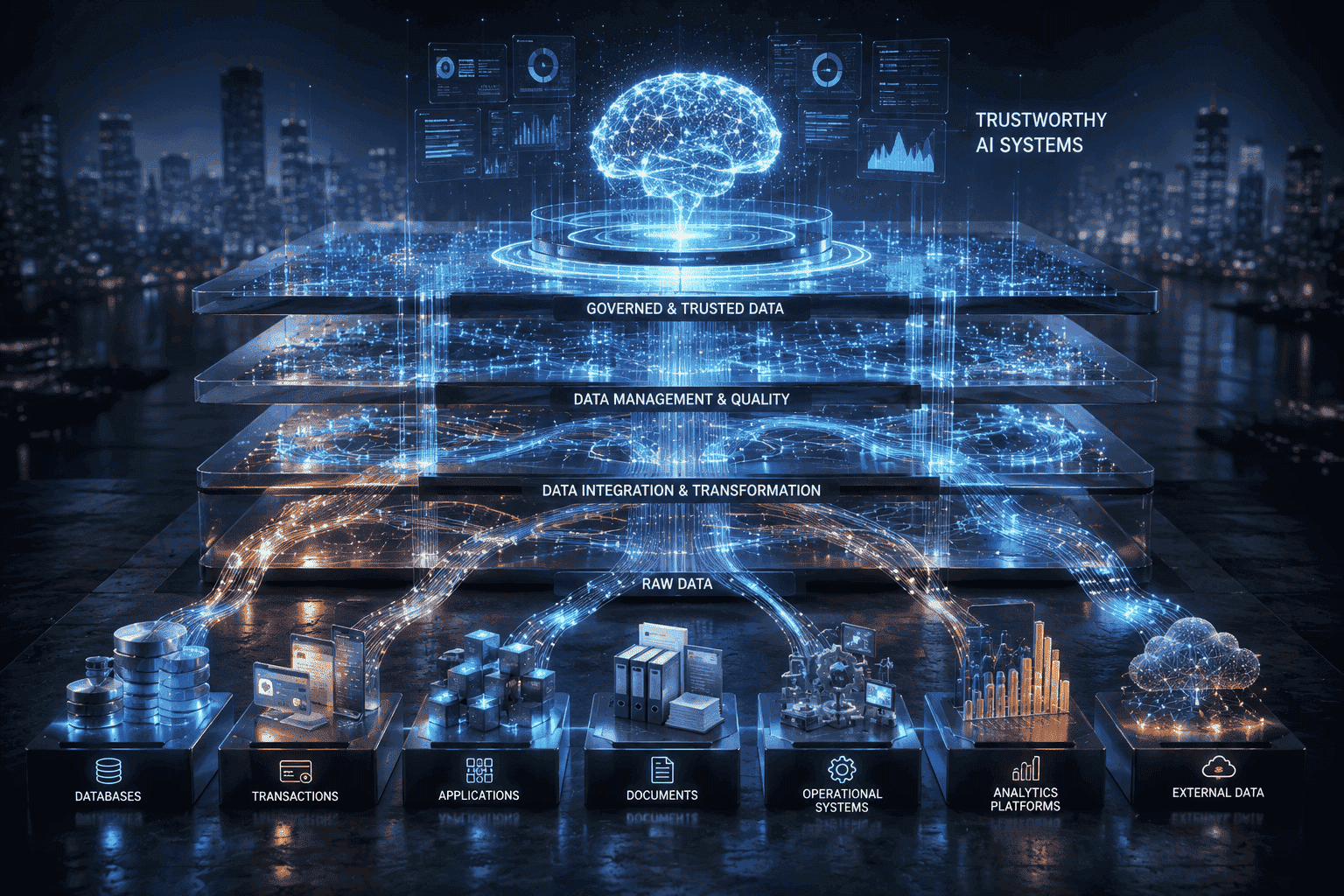
To simplify the system and prepare for rapid growth, including the ability to process billions of tokens every day, Factory consolidated its infrastructure on MongoDB Atlas.
The objective was to unify document storage, vector search, and embedding management in a single platform while maintaining strong performance, scalability, and cost efficiency.
What Is Factory in AI Driven Software Development?
Factory is an enterprise software development platform that integrates artificial intelligence agents into the software engineering lifecycle.
These AI agents, known as Droids, are designed to assist with tasks such as understanding complex codebases, generating code, reviewing changes, testing applications, and creating documentation.
The platform represents a shift toward agent native development environments where artificial intelligence becomes an active participant in development workflows rather than only acting as a productivity assistant.
By embedding artificial intelligence directly into development processes, Factory helps organizations build, maintain, and scale complex software systems more efficiently.
Differentiation with Voyage AI Embeddings
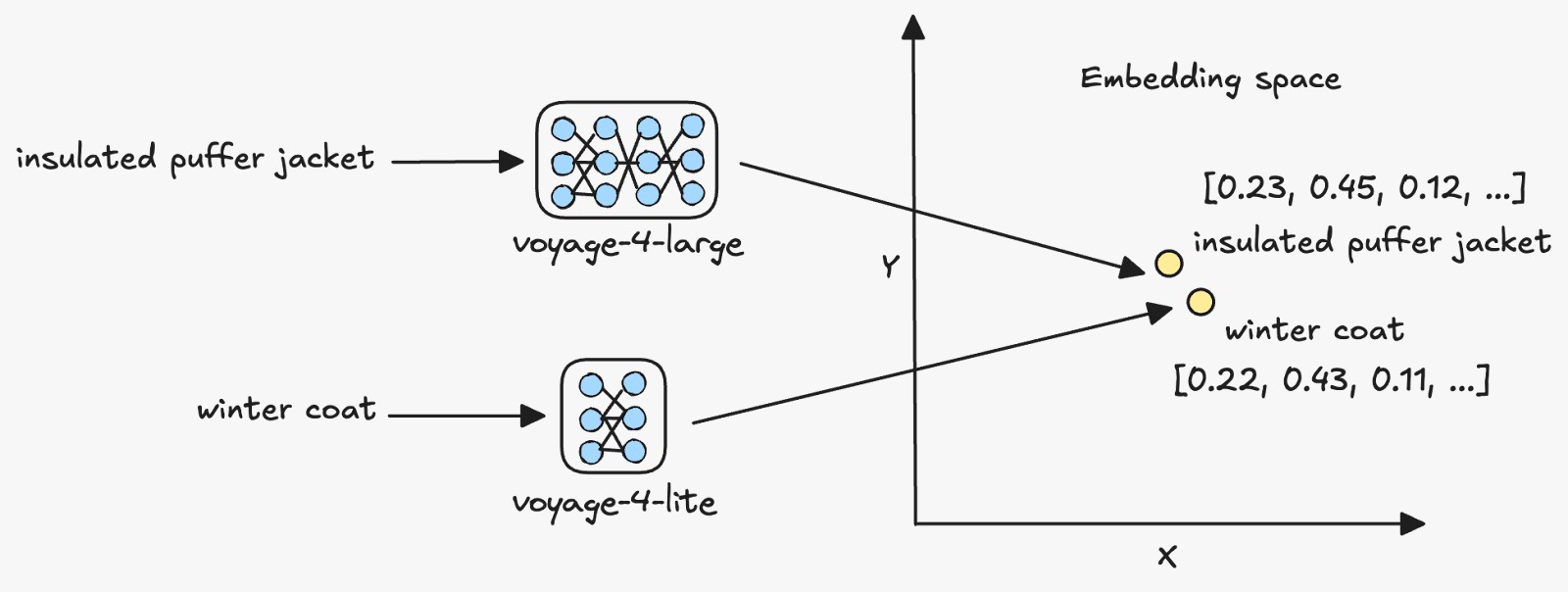
Voyage AI provides high quality embedding models that are now part of the MongoDB ecosystem. These embedding models became a major differentiator for Factory when evaluating technologies for code retrieval and AI driven development workflows.
Factory conducted benchmarking tests to compare Voyage embedding models with several alternative solutions. These evaluations focused on code retrieval tasks that require artificial intelligence agents to search and interpret large software repositories.
The results showed that Voyage embeddings delivered significantly stronger retrieval performance compared with other models. Based on these findings, Factory adopted Voyage AI as a core component of its platform.
This integration improved both the accuracy and reliability of code search and strengthened the performance of AI driven development workflows.
By consolidating document and vector workloads in MongoDB Atlas while leveraging Voyage embeddings, Factory achieved several important outcomes.
Seamless scalability to process billions of tokens each day
Support for hundreds of thousands of developers without performance bottlenecks
Reduced operational overhead by eliminating multiple specialized databases and integration layers
This streamlined architecture improves development agility, shortens deployment cycles, and strengthens Factory’s competitive position in the enterprise artificial intelligence development market.
Key Takeaways for Enterprise AI Development Platforms
Organizations building AI driven development platforms often face challenges related to data architecture, scalability, and operational complexity. The Factory platform demonstrates how consolidating core capabilities within a unified data platform can significantly improve performance and efficiency.
Key insights from this architecture include the importance of integrating document storage and vector search within the same environment, using high quality embedding models to improve retrieval accuracy, and simplifying infrastructure to reduce operational overhead.
These strategies enable AI driven platforms to scale more effectively while maintaining reliable performance for large developer communities.
Frequently Asked Questions
What is Factory in AI driven software development?
Factory is an enterprise development platform that uses artificial intelligence agents to support the full software development lifecycle. These agents help developers understand codebases, generate code, review software changes, run automated tests, and produce documentation.
Why did Factory choose MongoDB Atlas?
Factory selected MongoDB Atlas because it supports document storage and vector search within a single platform. This allows text data, metadata, and embeddings to be stored and processed together while maintaining strong scalability and performance.
What role does Voyage AI play in the Factory platform?
Voyage AI provides embedding models that improve code retrieval and semantic search capabilities. These embeddings allow artificial intelligence agents to understand relationships between pieces of code and documentation.
What are embeddings in artificial intelligence systems?
Embeddings are numerical representations of data such as text or code that allow artificial intelligence systems to measure similarity and relationships between different pieces of information.
How does MongoDB Atlas support AI agent workloads?
MongoDB Atlas supports artificial intelligence workloads by combining document storage with vector search capabilities. This allows AI agents to retrieve relevant information and process large datasets efficiently.
How does this architecture improve software development workflows?
By consolidating multiple databases and services into a single platform, Factory reduces operational complexity and enables faster development cycles. Developers can access code data, embeddings, and metadata in one place, improving efficiency and automation.